••
South Africa withdraws asylum order to quell anti-migrant violence
•2 min read•3 sources
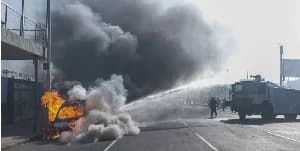
The South African government has officially retracted a directive to resume processing asylum applications after the move triggered a wave of violent anti-migrant riots in major cities. The unrest, which erupted in Durban and Johannesburg's Soweto, saw foreign-owned businesses looted and at least 24 vehicles set ablaze, forcing the state to reverse its decision in an effort to restore public safety and de-escalate tensions. President Cyril Ramaphosa has emphasized that the government is committed to maintaining safety for all people within the country's borders as the situation remains volatile.
The violence intensified in Durban and Soweto as protesters targeted foreign nationals, leading to direct clashes with police. According to reports, many shops were ransacked during the chaos, and law enforcement engaged in running battles with groups targeting non-nationals. The unrest was largely sparked by a sudden influx of asylum seekers at processing centers, which followed a recent Constitutional Court ruling. The court had deemed certain procedural barriers to asylum unconstitutional, leading to a surge in applications that overwhelmed refugee reception offices and fueled local grievances.
This latest outbreak of xenophobia is rooted in long-standing populist claims that migrants are taking jobs and public resources from local citizens. The timing of the riots is particularly sensitive as the country approaches local elections, a period often characterized by heightened political rhetoric regarding immigration and national identity. While three foreign nationals were recently arrested for the alleged assault of a local protester, the broader violence reflects a deep-seated history of unrest targeting non-nationals in South Africa's urban centers.
By withdrawing the asylum processing order, officials hope to provide a necessary cooling-off period and prevent further loss of property or life. However, the suspension of the directive leaves the legal status of thousands of asylum seekers in limbo as the government struggles to balance its constitutional obligations with domestic stability. Authorities continue to monitor the situation in both Durban and Soweto to prevent fresh outbreaks of violence while calling for calm from all residents.