••
South African Police Probe Serial Killing Fears After Ninth Woman’s Body Found Near Johannesburg
•2 min read•3 sources
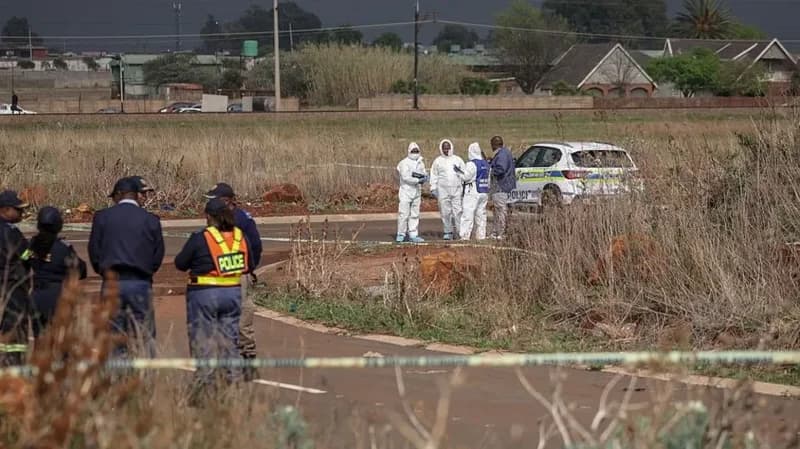
South African authorities are facing mounting public pressure following the discovery of a ninth woman’s body in the Dawn Park area, east of Johannesburg. This latest finding marks a grim milestone in a series of unexplained deaths that began in July, sparking fears of a potential serial killer or a wave of copycat murders in the Ekurhuleni region. The victim, whose identity has not yet been publicly released, was found half-naked and wrapped in a sheet on a roadside, exhibiting visible bruises and stab wounds. The discovery follows a two-month period of heightened anxiety as bodies continue to appear in similar circumstances across the outskirts of the city.
The string of murders has devastated local families and drawn national attention to the safety of women in South Africa. Among the identified victims are Elizabeth “Tsontso” Moselakgomo, who vanished while on a morning run, and Itumeleng Kekana. The pattern of disappearances and subsequent discoveries has left communities in Kempton Park and surrounding areas in a state of high alarm. In response, police have intensified their presence, setting up roadblocks and imposing temporary lockdowns in certain neighborhoods to facilitate search operations and forensic evidence gathering.
Investigators, led by Deputy Police Chief Tebello Mosikili, are working to determine if the cases are interconnected. While one suspect has been arrested in connection with the first body discovered in July, authorities have yet to establish a definitive link between that individual and the subsequent eight victims. Acting Police Minister Firoz Cachalia has urged the public to refrain from unfounded speculation while forensic experts and detectives process the scenes. To aid the investigation, the government has offered a reward of 400,000 rand (approximately $24,000) for information leading to an arrest, a figure bolstered by additional reward offers from the Democratic Alliance totaling nearly $31,000.
South African President Cyril Ramaphosa has pledged that the government will "leave no stone unturned" in bringing the perpetrators to justice, echoing the sentiments of Gauteng Premier Panyaza Lesufi. This crisis has reignited a fierce national debate over gender-based violence (GBV) in South Africa, where statistics suggest that one in three women will experience violence in their lifetime. Civil society organizations are calling for more than just investigations, demanding systemic reforms and stronger protections to address the pervasive culture of violence against women that continues to plague the nation.
