••
Fatal N1 Highway Collision in South Africa’s Western Cape Claims at least 21 Lives
•2 min read•1 source
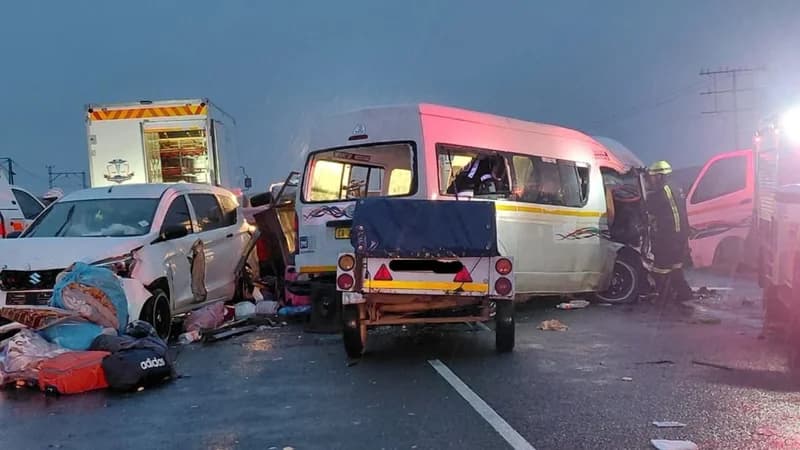
The N1 highway in South Africa’s Western Cape Province became the site of a devastating multi-vehicle accident late Sunday night, resulting in the deaths of at least 21 people and leaving four others critically injured. The horrific collision occurred approximately 380 kilometers east of Cape Town, specifically on the stretch of road between the towns of Prince Albert and Leeu-Gamka. Authorities from the Road Traffic Management Corporation (RTMC) have been dispatched to the scene, warning that the death toll could rise further as emergency services continue to process the wreckage and hospital reports come in.
The sequence of events began when two minibus taxis, which serve as the backbone of South Africa's public transportation system, collided head-on in the darkness. Shortly after the initial impact, a sport utility vehicle (SUV) crashed into the resulting wreckage, further complicating the scene and increasing the severity of the casualties. Emergency responders who arrived at the site described a scene of significant destruction. While many victims died instantly at the location, four individuals were rushed to a nearby hospital in critical condition; medical reports later confirmed that three of those patients were declared dead upon arrival.
Following the incident, law enforcement officials took the immediate step of closing the N1 highway to facilitate both rescue operations and a comprehensive forensic investigation. The Road Traffic Management Corporation has initiated a formal inquiry to determine the precise cause of the crash, focusing on factors such as vehicle speed, road conditions, and potential mechanical failures. The investigation aims to provide clarity on how such a high-impact collision occurred on a major national route, which remained closed for several hours as crews cleared debris.
This latest tragedy has once again ignited intense public debate regarding road safety standards in South Africa, particularly within the commercial transport sector. Minibus taxis are the primary mode of transport for millions of citizens, yet they are frequently involved in high-fatality accidents often attributed to driver fatigue, speeding, or poor vehicle maintenance. This incident serves as a grim reminder of the urgent need for stricter enforcement of traffic regulations and improved safety protocols to protect commuters on the country's major transport arteries.
