••
South African Police Investigate Potential Serial Killer After 10th Woman Found Dead in Ekurhuleni
•3 min read•4 sources
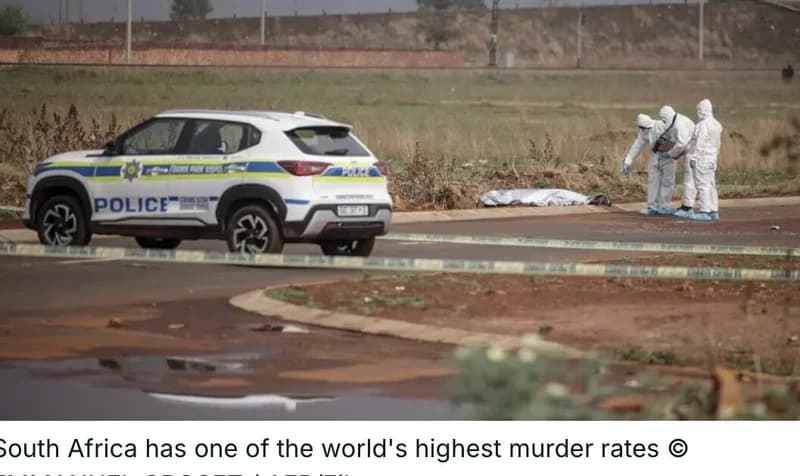
South African law enforcement authorities have launched a high-level investigation following the discovery of a tenth woman’s body in the Ekurhuleni municipality, marking a gruesome milestone in a two-month wave of violence. The latest victim was found semi-naked near a cemetery in the Tembisa township, located in Johannesburg's East Rand. Preliminary reports suggest she may have been stoned to death, a brutal detail that has intensified public outcry over the safety of women in the region. This series of killings, which began in mid-July, has seen most victims aged between their 20s and 30s, with many exhibiting signs of extreme violence and sexual assault.
In response to the escalating crisis, police are exploring potential links between the ten murders to determine if a serial killer is operating in the area. While several suspects have already been taken into custody in connection with individual cases, investigators have not yet ruled out the possibility that some of the killings may be tied to interpersonal relationships rather than a single perpetrator. Authorities have offered financial rewards for information leading to further arrests as they conduct post-mortem examinations to confirm causes of death and establish forensic patterns across the crime scenes.
The string of murders has cast a shadow of fear over daily activities, particularly among women runners in the East Rand. Following the murder of fellow athlete Elizabeth Moselakgomo, local runners have reported carrying knives and pepper spray during their exercises. Many women have begun altering their routines, opting for group sessions or using mobile tracking technology to share their locations with family members. Despite the climate of fear, community members have organized vigils and protests, demanding more robust protection and a swifter judicial response to what they describe as a systemic failure to protect female citizens.
This spike in violence highlights a broader national crisis in South Africa, a country that grapples with one of the world’s highest murder rates, averaging over 60 killings per day. The national Gender-Based Violence (GBV) Command Centre reported a 21% increase in distress calls during September alone, underscoring the severity of the situation. President Cyril Ramaphosa has acknowledged the crisis, describing it as a national emergency and emphasizing that women should have the right to move freely in public spaces without fear of violence. As the investigation in Ekurhuleni continues, the case remains a focal point for activists calling for urgent reforms in how the state addresses gender-based crimes.