••
Sotheby’s sells Nanotyrannus skeleton for $47.3m in New York
•2 min read•1 source
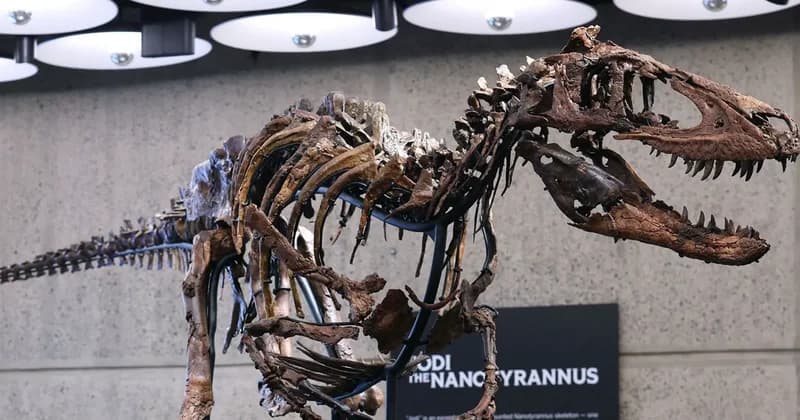
A newly identified dinosaur skeleton nicknamed "Jodi" has fetched $47.3 million at a Sotheby’s auction in New York, marking one of the most expensive fossil sales in history. The specimen, a Nanotyrannus, was sold to an undisclosed buyer after a competitive bidding process involving six participants. This transaction represents the second-highest price ever paid for a dinosaur fossil, trailing only the $50.1 million sale of a Tyrannosaurus rex.
The skeleton's identification has been a subject of significant interest within the paleontological community. For years, specimens like Jodi were believed to be juvenile Tyrannosaurus rexes; however, researchers confirmed only a year ago that they belong to a distinct genus known as Nanotyrannus. This scientific reclassification added to the specimen's allure and market value, leading to the high-stakes auction that concluded this week.
The sale has reignited a longstanding debate regarding the ethics of private fossil auctions. Many paleontologists express concern that selling scientifically significant remains to private collectors hinders research and deprives the public of the opportunity to view these ancient relics. While some experts worry about the loss of data, others hold out hope that the anonymous buyer might eventually donate or loan the skeleton to a museum for study and public exhibition.