••
Hassan Sheikh Mohamud's term extension ruled unlawful by Somalia Supreme Court
•2 min read•1 source
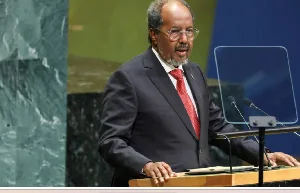
Somalia’s Supreme Court has officially declared the extension of President Hassan Sheikh Mohamud’s term in office to be unlawful, a ruling that has immediately triggered a surge in political tension across Mogadishu. The judicial decision challenges the legal basis for the president’s continued tenure and has set the stage for a significant constitutional confrontation between the executive and judicial branches of government. The ruling marks a pivotal moment for the nation as it navigates complex transitions in its political leadership.
In the immediate aftermath of the ruling, opposition leaders intensified their criticism of the administration, accusing President Mohamud of attempting to subvert the independence of the court. These leaders claimed that the presidency sought to interfere with the judicial process by allegedly attempting to detain the Supreme Court’s Chief Justice. These accusations have added a layer of volatility to an already strained political environment in the capital, raising concerns about the potential for further institutional clashes.
Residents in Mogadishu have reacted with a mixture of concern and approval, reflecting the deep political divisions within the country. While some citizens have lauded the Supreme Court for its perceived independence and commitment to the rule of law, others expressed anxiety that the legal uncertainty could lead to further instability. The city remains on high alert as security concerns often accompany such high-stakes political developments in Somalia’s fragile democratic landscape.
The ruling places President Mohamud in a precarious position as he faces domestic pressure to adhere to constitutional mandates. As the government prepares its next steps, the focus remains on whether a peaceful resolution can be found to the mandate dispute. The outcome of this legal battle will likely have long-term implications for the structure of governance and the future of electoral processes in the Horn of Africa nation, determining the strength of its democratic institutions.
