Anansi News
HomeBriefsAsk GhanaTopicsTools
•
•

Stay Informed

Get AI-curated news briefs from Ghana delivered to your inbox every morning. Free forever, no spam.

Explore

  • Home
  • Briefs
  • About

Categories

  • Politics
  • Business
  • Sports
  • Entertainment
  • Africa

Features

  • Analysis
  • Cedi Rates
  • Dollar to Cedi
  • Ghana Gold Price
  • BoG Policy Rate

Topics

  • Armed Forces Recruitment
  • WAEC Results & News
  • Nana Ama McBrown
  • NDC News
  • All Topics

Legal

  • Privacy Policy
  • Terms of Service
Anansi News© 2026. All rights reserved.
Made withfor Ghana
politics

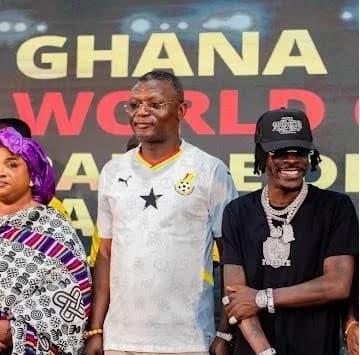
Shatta Wale Demands GH¢5m for Black Stars Promotion, Calls for Dissolution of Tourism Ministry

Yesterday•2 min read•10 sources
Gov’t owes me GH¢5m, but Sports Minister won’t pick my calls — Shatta Wale fumes
  1. Home
  2. /Politics
  3. /Shatta Wale Demands GH¢5m for Black Stars Promotion, Calls for Dissolution of Tourism Ministry

Ghanaian dancehall icon Shatta Wale has sparked a national conversation after publicly demanding GH¢5 million from the government for promotional services rendered during the Black Stars’ 2026 FIFA World Cup campaign. During a series of interviews, the artist expressed deep frustration over what he described as "total disrespect" from government officials, claiming that despite completing extensive advertising and promotional activities, his invoices remain unpaid. He specifically called out the Minister of Youth and Sports for failing to return his calls, highlighting a significant breakdown in communication between the state and the creative professionals it engages for national projects.

While the government had previously announced a GH¢76 million allocation to support the Black Stars’ World Cup efforts, Shatta Wale clarified that his financial grievance is strictly professional. He noted that he had personally contributed $100,000 to the national team’s fundraising efforts in March 2026, but emphasized that this donation is entirely separate from the GH¢5 million debt owed to his business for contracted services. The artist’s complaints shed light on the broader challenges faced by the creative industry when entering commercial arrangements with state institutions, particularly regarding payment delays and lack of accountability.

Beyond his financial claims, Shatta Wale offered a scathing assessment of President John Mahama’s current administration. While the musician stated he supports the President’s personal vision and ideology, he expressed profound dissatisfaction with the performance of the President’s appointees. Shatta Wale remarked that he could not identify a single "best-performing" minister in the current cabinet, suggesting that the execution of government policies is being hampered by ineffective leadership at the ministerial level. This distinction between the President and his staff underscores a complex political stance from one of the country’s most influential cultural figures.

In a more radical policy proposal, the musician called for the total dissolution of the Ministry of Tourism, Culture and Creative Arts. Despite acknowledging that former Deputy Minister and current MP Dzifa Gomashie is his aunt, he argued that the ministry has failed to provide innovative support for musicians and actors. Shatta Wale contended that the institution lacks the proactive initiatives necessary to promote Ghanaian talent on the international stage and suggested that the current structure is insufficient for the industry's growth. He urged the government to evolve beyond traditional roles and implement practical measures that directly benefit the creative economy, rather than maintaining what he views as an ineffective bureaucracy.

Our Take

From the Team

Coming Soon

Our team will add key insights, trends, and actionable takeaways to help you stay informed faster.

This story touches markets covered on Anansi Intelligence ↗.

Related topic

John Mahama: Latest News & Updates →

More from politics

Continue exploring similar stories

Rev. David Aboagye-Danquah - Clerk of the General Assembly of the Presbyterian Church of Ghana
politics|Yesterday

Ghana’s Governance Reforms Gain Momentum as Parliament Approves Fiscal Council and BoG Tightens Financial Oversight

Ghana’s governance framework is undergoing a significant transition under President John Mahama as Parliament has approved a five-member Fiscal Council to strengthen economic management. Chaired by Dr. Emmanuel Oteng Kumah, the council includes prominent experts such as Dr. Henry Kofi Wampah and Professor Patrick Opoku Asuming. The body is tasked with promoting fiscal discipline and providing expert analysis of public financial management. Simultaneously, the Bank of Ghana (BoG) has accelerated its regulatory efforts, with Governor Dr. Johnson Pandit Asiama announcing a 2027 deadline for the full implementation of the Virtual Asset Service Providers Act. To bolster financial integrity, the BoG has also inaugurated a Preliminary Investigation Committee to monitor undeclared foreign currency at borders, aiming to curb money laundering and tax evasion. Economic policy remains a point of contention between the current administration and the previous government’s economic team. Dr. Gideon Boako, MP for Tano North, has defended Dr. Mahamudu Bawumia’s claims regarding an IMF-imposed monthly cap on foreign exchange interventions during the previous term. Boako clarified that a cap of $80 million, later reduced to $60 million, was strictly followed to rebuild international reserves. He argued that this discipline provided the current government with greater flexibility in its own interventions. However, the current economic climate faces scrutiny from legal practitioner Martin Kpebu, who warned the NDC government that the reported 56.4% unemployment rate is a 'scary' indicator of the challenges ahead. Institutional and constitutional reforms are also taking center stage as the New Patriotic Party (NPP) prepares to announce its official position on proposed amendments to the 1992 Constitution. These proposals include changes to presidential terms and dual citizenship eligibility. Parallel to these state reforms, the Presbyterian Church of Ghana has approved a landmark constitutional revision, allowing its members to serve in traditional leadership roles provided they renounce rituals that conflict with Christian doctrines. Meanwhile, civil society organizations, led by the POS Foundation and the Africa Centre for International Law and Accountability, are urging the government to prioritize human rights recommendations and the passage of the Code of Conduct for Public Officers Bill. In the media and social sectors, leaders are calling for greater responsibility in public discourse. David Tamakloe, President of PRINPAG, warned against confusing social media activities with professional journalism, emphasizing the need for rigorous standards in security reporting. This sentiment was echoed by Joyce Bawah Mogtari, Senior Presidential Aide to President Mahama, who advised that social media profiles have become public reference points that should be used for constructive advocacy. As the nation moves toward the 2028 electoral cycle, political and religious leaders, including Dr. Mustapha Abdul-Hamid, are advocating for the protection of Ghana’s religious tolerance, urging citizens to focus on policy debates rather than identity politics.

Participants from Ghana, Burkina Faso and Cote d’ Ivoire at the meeting
politics|Yesterday

Interior Minister Mohammed-Mubarak Affirms Ghana’s Democratic Stability Amid Global Geopolitical Shifts

Ghana’s Minister for the Interior, Muntaka Mohammed-Mubarak, has reaffirmed the nation’s democratic resilience during a high-level meeting with Russian Ambassador Sergei Berdnikov. Highlighting Ghana’s history of peaceful power transfers and the citizens' commitment to stability, the Minister emphasized that despite current governance challenges, the nation remains a beacon of democracy in the region. This diplomatic engagement underscored the importance of international cooperation, with both officials discussing enhanced bilateral security ties and specialized training initiatives. The meeting aligns with Ghana's broader efforts to secure its borders and foster regional peace, exemplified by a week-long bilateral engagement in Wa with Burkina Faso and Côte d'Ivoire. This initiative aimed to harmonize legal frameworks for Local Groups for Cross-Border Cooperation (LGCBCs), facilitating joint solutions to shared socio-economic challenges along shared boundaries. While Ghana focuses on regional consolidation, the global political landscape is being reshaped by a historic oil agreement between the United States and Venezuela. President Donald Trump announced a deal granting the U.S. 55% control over a joint venture to develop 17 strategic oil fields, encompassing over 65 billion barrels of proven reserves. Billed as a move to double American oil reserves and lower gas prices, the agreement follows the capture of former President Nicolás Maduro by U.S. forces. Venezuelan interim President Delcy Rodriguez expressed optimism that the deal would trigger a $100 billion economic revival through private investment, though the 100-year concession faces significant questions regarding its legal and constitutional validity under international law. In Europe and Asia, the human cost of political and environmental crises continues to mount. At least 27 people were killed and hundreds evacuated following a series of Russian drone strikes in the Kyiv region of Ukraine. The attacks, which caused massive explosions at local warehouses and injured dozens, prompted President Volodymyr Zelensky to call for global solidarity and stricter safety measures regarding ammunition storage near residential areas. Simultaneously, in Tibet, severe flooding at Gyirong Port has reportedly claimed hundreds of lives. However, China’s state media has been accused of censoring the true scale of the disaster, prioritizing rescue narratives over survivor accounts and suppressing information that could lead to social unrest. These diverse developments—from the strengthening of local cross-border cooperation in West Africa to massive shifts in global energy control and the ongoing tragedy of the war in Ukraine—highlight a volatile international order. For Ghana, the emphasis remains on maintaining internal stability and fostering strategic partnerships to navigate these global uncertainties. As the Interior Ministry pursues deeper security cooperation with international allies, the nation continues to position itself as a stable partner in an increasingly complex geopolitical environment, even as shadows of the past, such as the ongoing legal repercussions for figures linked to the 9/11 attacks, continue to influence modern perceptions of security and trust.

Douglas Quartey — Local Governance Expert
politics|Yesterday

Government Intensifies Local Accountability Measures Amidst Rising Public Grievances Over Utilities and Infrastructure

Ghana’s local governance landscape is facing a pivotal moment as the government moves to strengthen financial oversight while grappling with intensifying public demonstrations over service delivery. In a significant effort to bolster transparency, the Oti Regional Coordinating Council (ORCC) and the Internal Audit Agency (IAA) have inaugurated new audit committees across nine municipal and district assemblies in the Oti Region and five regions in the north. Acting Director-General of the IAA, Mr. Conrad Dumbah, and Oti Regional officials emphasized that these committees are not adversaries to local management but essential partners in safeguarding public resources. These moves come at a time when local governance experts, including Douglas Quartey, are calling for a fundamental rethink of Ghana’s non-partisan local election system, arguing that partisan involvement would increase citizen participation and hold officials more strictly accountable. Simultaneously, the government is responding to a wave of social unrest rooted in utility and infrastructure failures. In the Ketu South Municipality, residents are prepared to stage a peaceful demonstration on September 1, 2026, under the banner "Enough Is Enough! Stop the Over-Billing Now!" The protest, led by convener Edem Mensah Viglo, targets the Electricity Company of Ghana (ECG) for persistent over-billing and delays in repairing faulty meters, which locals claim have crippled businesses and fueled unemployment. In response, the Minister for Energy, Dr. John Abdulai Jinapor, has announced an independent investigation by the Public Utilities Regulatory Commission to address these grievances. Similar frustrations are boiling over in Dome-Kwabenya, where stakeholders are demanding urgent transparency and action regarding the stalled Dome-Kwabenya-Kitase road project, citing safety risks and vehicle damage. In the Volta Region, the push for better governance is complicated by reports of exploitation among vulnerable populations. Elikplim Klu, the Volta Regional President of the Ghana Federation of Disability Organisations (GFD), recently condemned caregivers for misappropriating funds and selling benefit application forms intended for persons with disabilities (PWDs). While the Ho Municipal Assembly successfully distributed GH 262,980 worth of livelihood items—including deep freezers and laptops—to 76 PWDs, the regional leadership has vowed to prosecute those hindering the rights of the disabled. Amidst these challenges, some local leaders have received praise; Chiefs and Queen Mothers in the Ho Municipality commended Municipal Chief Executive (MCE) Hon. Stephen Adom for his judicious use of Internally Generated Funds (IGF) to improve healthcare and sanitation. As the administration of President John Mahama continues its term, these developments highlight a dual challenge: the need to maintain fiscal discipline through new audit structures while addressing the immediate, tangible needs of citizens. While Paramount Chiefs like Togbega Sesinu VI of Hoe continue to appeal for basic infrastructure such as water supply and telecommunications, the government's ability to resolve the ECG billing crisis and road infrastructure delays will likely serve as a litmus test for its commitment to decentralized development. The coming months will determine if the newly inaugurated audit committees can translate into better service delivery and if the promised investigations can restore public trust in state institutions.

Artist's impression of the Multipurpose Multi-tiered Car Park and Airport Hotels Complex at Accra International Airport
politics|Yesterday

President Mahama Drives National Development Through Massive Infrastructure Investment and Public Sector Reforms

President John Mahama has signaled a robust commitment to national development, spearheading major infrastructure projects under the "Big Push" program while demanding higher standards of professionalism within the public sector. From the expansion of Accra’s aviation facilities to massive electrification efforts in the Volta Region, the administration is moving to address long-standing gaps in the country's physical and administrative framework. These initiatives are designed to anticipate future growth, with passenger traffic at the national airport alone projected to rise to 2.5 million by 2025. The President emphasized that infrastructure development must be matched by a commitment to quality and institutional integrity to ensure long-term national prosperity. Central to this development agenda is the launch of a multi-purpose car park and hotel complex at the Accra International Airport. The seven-storey project, which includes a 120-room five-star hotel and over 2,000 parking bays, is being funded internally by the Ghana Civil Aviation Authority and the Ghana Airports Company Limited. During the ceremony, President Mahama took a firm stance on service quality, instructing airport personnel to cease soliciting tips from travelers—a practice he warned damages Ghana’s international reputation. He emphasized that as infrastructure improves, so too must the conduct of the workers representing the nation at its primary gateway, noting that authorities are already taking strict actions, including dismissals, against such practices. Beyond the capital, the "Big Push" program is making significant strides in rural and regional connectivity. The Ministry of Energy and Green Transition, led by Dr. John Abdulai Jinapor, has launched a GHS598 million electrification project aimed at connecting 206 communities in the Volta Region to the national grid within six months. Simultaneously, in the Upper West Region, Members of Parliament, including Wa West MP Peter Lanchene Toobu, have been actively monitoring road projects like the Wa-Tumu road. These efforts underscore a nationwide push to ensure that contractors deliver quality work on schedule to meet the government's goal of universal electricity access and improved transport links across the country. Complementing these physical developments are major policy shifts aimed at modernizing state institutions and ensuring public safety. The Driver and Vehicle Licensing Authority (DVLA) is transitioning to local production of vehicle number plates, constructing a manufacturing center in Accra to eliminate reliance on third-party imports and integrate RFID technology for enhanced security. In tandem with these administrative upgrades, Interior Minister Mohammed Mubarak Muntaka has proposed mandatory drug testing for all public sector recruits. This proposal follows the disqualification of over 6,000 security service applicants due to drug-related issues and mental health concerns, highlighting a strategic intent to maintain the integrity and professional standards of the nation's public workforce.

All
africa
business
education
entertainment
health
news
politics
sports
technology