••
Senyo Hosi and African Experts Demand Structural Reforms and Strategic Resource Negotiations at SYPALA 2026
•3 min read•5 sources
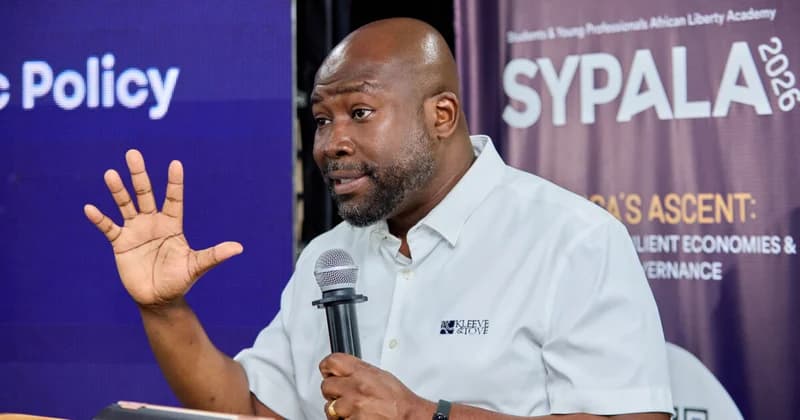
At the 2026 Students and Young Professionals Africa Liberty Academy (SYPALA) in Accra, prominent African leaders and experts called for a fundamental shift in the continent’s approach to economic development, governance, and international negotiations. Organized by IMANI Africa at the University of Professional Studies, Accra (UPSA), the summit highlighted that while Africa possesses vast natural and human resources, it continues to be 'short-changed' due to weak institutional enforcement and a lack of strategic bargaining power. The speakers urged a move away from celebrating abstract growth figures toward implementing tangible structural reforms that prioritize job creation and sustainable production.
Senyo Hosi, the Founder and Executive Chairman of Kleeve and Tove Ltd, challenged the prevailing focus on Gross Domestic Product (GDP), arguing that economic growth is meaningless if it does not translate into quality employment for the continent's youth. With nearly 75% of young adults in sub-Saharan Africa facing insecure work, Hosi identified five critical drivers for transformation: policy certainty and the rule of law, productive infrastructure, human capital development, domestic resource mobilization, and regional integration through the African Continental Free Trade Area (AfCFTA). He criticized the tendency to label survivalist economic activities as entrepreneurship, calling instead for a shift toward scalable industrial production and ethical business standards that can compete on a global stage.
Addressing the continent's governance challenges, Edem Senanu, Chairperson of the AU Advisory Board Against Corruption, emphasized that Africa’s anti-corruption frameworks are ineffective without rigorous enforcement. He pointed out a widening gap between legal commitments and their implementation, which has eroded public trust in democratic institutions. To bridge this divide, Senanu proposed the creation of a public accountability dashboard and enhanced protections for whistle-blowers. He stressed that the African Union’s performance should be measured by visible consequences for violations and tangible improvements in citizens' lives rather than the mere existence of anti-graft laws.
Complementing these perspectives, retired Colonel Festus Aboagye warned that Africa is failing to leverage its resources effectively in the global arena. He argued that possessing raw materials does not automatically equate to geopolitical influence or economic power. Using examples such as Ghana’s power plant negotiations, Aboagye noted that Africa loses significant value by exporting raw materials without processing. He advocated for a strategy of 'multi-alignment' to maximize benefits from competing global powers and urged governments to consult independent experts to secure more favorable terms in international agreements. The collective message from the summit was a call to action for young Africans to engage in public policy and hold their leaders accountable to ensure the continent's potential is finally realized.


