••
Minister Sam George and Tertiary Institutions Launch Nationwide Digital Upskilling Drive for Students and Educators
•2 min read•5 sources
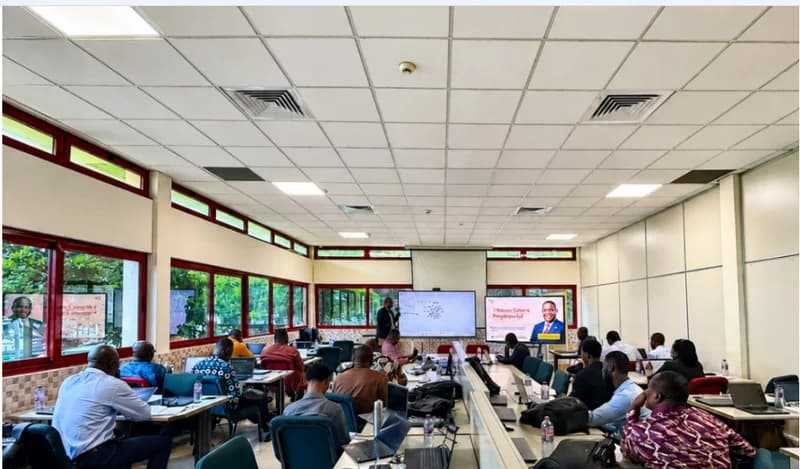
The Government of Ghana has taken a significant step toward future-proofing the nation's workforce by integrating the "One Million Coders" certification into the academic programs of eleven leading universities, including the University of Ghana and Kwame Nkrumah University of Science and Technology (KNUST). Minister for Communication, Digital Technology and Innovation, Samuel Nartey George, announced the signing of Memoranda of Understanding (MoUs) designed to ensure that tertiary students graduate with industry-relevant digital skills alongside their formal degrees. This move is part of a broader national strategy to catalyze the digital economy, which has already seen nearly 30,000 active learners enrolling in specialized courses such as cybersecurity and data analytics since August 2026.
In a parallel effort to ensure gender inclusivity in the tech sector, the government also inaugurated the 2026 National Girls in ICT Day in Accra under the theme "AI for Development: Girls shaping the digital future." The initiative brought together 100 high-performing girls from the Volta and Upper West Regions for intensive week-long training, hands-on workshops, and mentorship from industry leaders. Minister Sam George emphasized that this program is more than just training; it is a vital national investment aimed at dismantling the gender gap in high-growth fields like Artificial Intelligence (AI) and software engineering. Supporting this mission, the University of Cape Coast (UCC) recently launched its "Women Leading Change in Africa" program, offering free AI and digital training to over 2,000 women educators and institutional leaders to address leadership underrepresentation in education.
Strengthening these public efforts, global technology giant Huawei has committed to training 100,000 Ghanaians over the next four years as a key partner of the government's One Million Coders Program. This partnership focuses on advanced domains including Cloud Computing, 5G, and Datacom, with a "Training of Trainers" session having already commenced in late August 2026. Participants in these sessions will receive joint certification from Huawei and the Ministry of Communication, Digital Technology and Innovation, enabling them to cascade their knowledge to others. By leveraging private sector expertise and academic infrastructure, the government aims to create a sustainable pipeline of digital talent capable of driving national development and solving real-world challenges through innovation.


