••
U.S. Customs Dog Rowdy Intercepts 72 Pounds of Prohibited Ghanaian Food at JFK Airport
•2 min read•3 sources
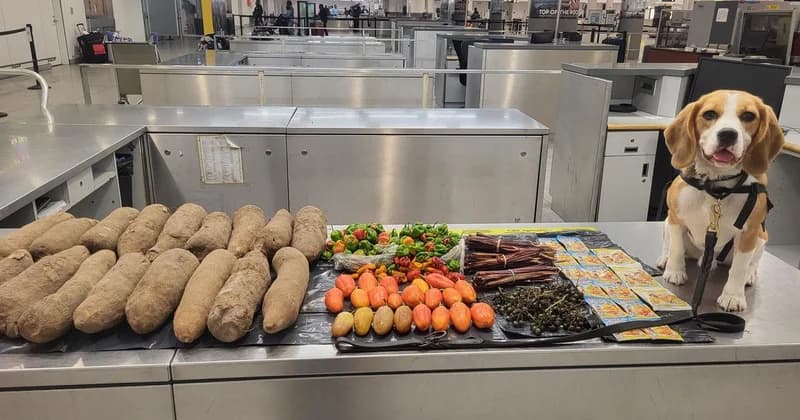
In a significant enforcement action at John F. Kennedy International Airport (JFK) in New York, a U.S. Customs and Border Protection (CBP) K9 detection dog named Rowdy successfully intercepted a large quantity of prohibited agricultural products arriving from Ghana. The alert from the specially trained sniffer dog led officers to a shipment containing approximately 72 pounds of yams, vegetables, and assorted spices. This interception, officially announced by Executive Assistant Commissioner Diane J. Sabatino, underscores the ongoing efforts by U.S. authorities to monitor and regulate international imports to safeguard domestic agricultural resources and environmental health. The seized items, which included staple Ghanaian foodstuffs, were flagged because they did not meet the stringent entry requirements established by the United States Department of Agriculture (USDA). K9 Rowdy’s role in the operation was critical; his keen sense of smell allowed him to identify the organic materials within a traveler’s bag that might otherwise have gone unnoticed during routine manual screenings. Officials from CBP and directors at JFK praised the dog’s vigilance, noting that the ability to stop prohibited items at the border is a key component of the nation’s biosecurity strategy. The primary objective of these strict restrictions is to prevent the introduction of foreign pests and diseases into the United States. Agricultural products like raw yams and fresh vegetables can harbor invasive insects or pathogens that, if introduced, could devastate American farms and lead to significant economic consequences. These regulations are part of a broader federal mandate to protect the nation’s food supply and economic stability from biological threats. The seizure highlights the complexity of international travel where cultural food staples must be balanced against national safety standards. Following the successful alert by Rowdy, the 72 pounds of food items were confiscated and slated for destruction according to federal protocols to ensure no harmful organisms could spread. Travelers from Ghana and other West African nations are encouraged to check current U.S. agricultural guidelines and declare all food items upon arrival to avoid seizures, potential fines, or legal action. This incident at JFK serves as a prominent example of how canine units continue to be an indispensable asset in modern border security and public health protection.
