••
Richard Jakpa warns Daffiama-Bussie-Issa students against illegal mining
•2 min read•1 source
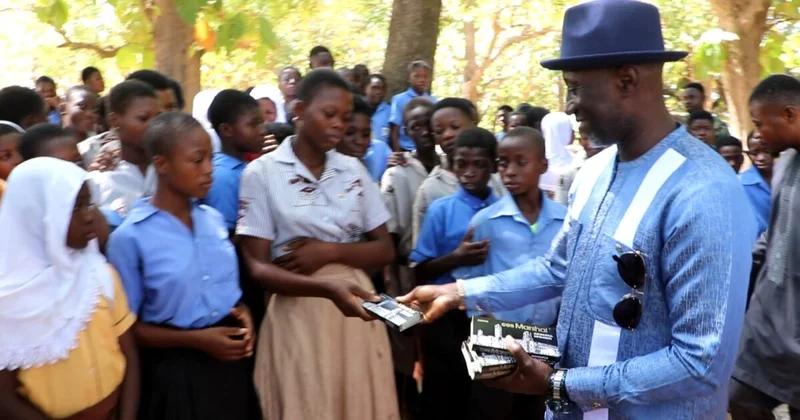
Richard Jakpa, the Director of Operations at the National Security Secretariat, has expressed deep concern over the rising number of male students in the Daffiama-Bussie-Issa District who are dropping out of school to engage in illegal small-scale mining, commonly known as galamsey. Speaking during a donation of mathematical sets to Basic Education Certificate Examination (BECE) candidates, Jakpa observed a noticeable gender imbalance in local classrooms, where girls now outnumber boys. He warned that this trend threatens the socio-economic future of the community and urged male students to resist the lure of quick money from mining pits.
During the engagement, Jakpa emphasized that prioritizing education is the only sustainable path to personal and communal development. He cautioned that if the current dropout rate among boys continues, it will lead to significant social challenges, including a future where educated women may struggle to find suitable partners within their own community. To support the students' academic journey, he pledged that the government and his office would provide continuous resources, including the proposed construction of a Science Senior High School in the district and the renovation of dilapidated school facilities.
The event also featured contributions from local leadership, with District Chief Executive James Wor calling for professional conduct among educators. He specifically cautioned teachers against engaging in inappropriate relationships with students, which he noted undermines the educational goals of the district. The District Director of Education, Pognaa Sadia Gbollu, acknowledged the difficulties in monitoring student movements and stated that her office is intensifying efforts to sensitize parents about the critical importance of keeping their children in the classroom.
Students who received the mathematical sets expressed their appreciation for the support and committed to focusing on their upcoming exams. Jakpa concluded by encouraging the youth to grow together through education, rather than seeking short-term gains that compromise their health and future prospects. The donation and the accompanying warnings reflect a broader strategy to combat the influence of illegal mining on the youth in mining-affected regions of Ghana.
