••
Prudential Life, GCB Bank, and The Or Foundation Spearhead New Wave of Corporate Sustainability and Community Impact
•3 min read•5 sources
West African corporate and non-profit sectors are demonstrating a heightened commitment to environmental, social, and governance (ESG) standards, led by Prudential Life Insurance Ghana being named the 2025 Corporate Social Responsibility (CSR) Company of the Year. At the Chartered Insurance Institute of Ghana Excellence Awards, Prudential was recognized for its holistic approach to community development, including the Mangrove Restoration Project and the PRU Climate Action Project. The company has also made significant strides in education and financial literacy through its Cha-Ching Programme, while providing tangible infrastructure like recycled plastic desks for schools and vocational training for vulnerable women. This recognition highlights a broader shift where CSR is no longer a peripheral activity but a core component of institutional strategy.
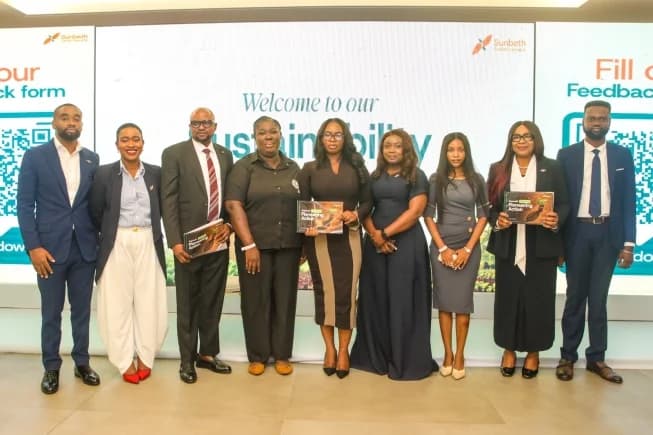
Simultaneously, financial institutions and agricultural leaders are integrating sustainability into their operational frameworks to drive regional development. GCB Bank PLC has launched two major initiatives: a partnership with the Ghana National Fire Service to train traders at Accra’s Circle and Kantamanto markets in fire prevention, and a collaboration with the Catholic Church for the West Africa Youth Days 2026. The bank’s fire safety program includes the donation of extinguishers and the creation of 20 Market Fire Safety Champions to protect local livelihoods. In the agricultural sector, Nigeria-based Sunbeth Global Concepts has set a regional benchmark by becoming the first Nigerian agricultural firm to voluntarily adopt the IFRS S1 and S2 Sustainability Disclosure Standards, documenting its efforts in ethical sourcing, child labor remediation, and the mapping of over 140,000 hectares of farmland.
Innovation in the circular economy is also reaching the global stage through the work of the Accra-based non-profit, The Or Foundation. The foundation is set to unveil its recycled textiles platform, Foose Materials, at the London Design Festival in September 2026. The showcase will feature 'Cassaboard,' a biocomposite made from shredded post-consumer textiles, and 'Tarnty,' a circular yarn created from unsold garments sourced from Ghana’s Kantamanto Market. These initiatives directly address the environmental crisis caused by global fast fashion by converting waste into high-value design materials, thereby supporting local artisans and environmental restoration.
These combined efforts across the insurance, banking, agriculture, and textile sectors underscore a maturing business landscape in West Africa. By focusing on financial inclusion, environmental remediation, and disaster prevention, these organizations are addressing systemic risks while fostering community resilience. As these projects move into 2026, the emphasis remains on transparency and measurable impact, signaling a new era where regional growth is inextricably linked to sustainable and ethical business practices.
Related topic
Ghana Fire Service Recruitment: Latest News Today →
