••
Prudential Bank CIO Leopold Armah Urges AI Literacy and Industry-Academia Synergy at Ghana AI Summit
•2 min read•1 source
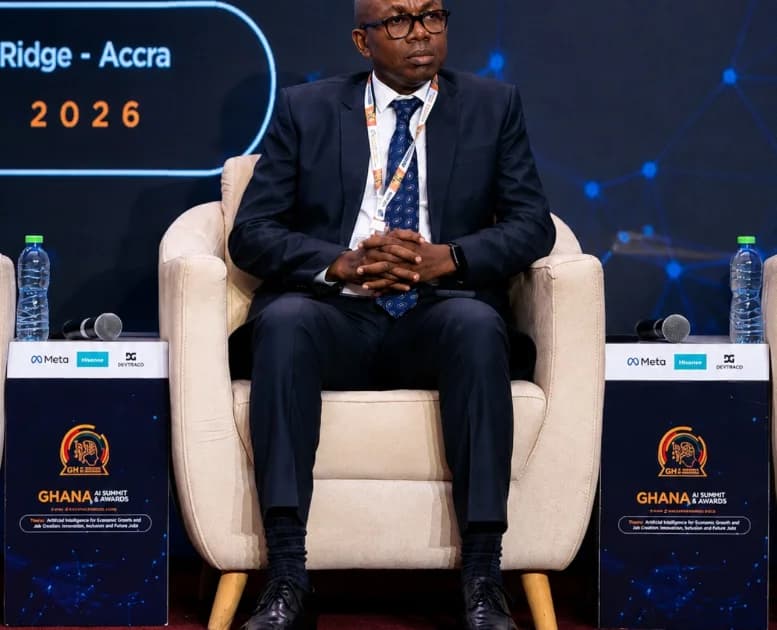
Leopold L.L. Armah, the Chief Information Officer of Prudential Bank LTD, has called for a fundamental shift in how Ghana prepares its workforce for an increasingly automated future. Speaking at the Ghana AI Summit, Armah emphasized that as artificial intelligence continues to reshape industries—most notably the financial services sector—educational and professional training must adapt to focus on AI literacy. He argued that the next generation of workers needs more than just technical proficiency; they require a balanced mix of creativity, analytical thinking, and a proactive attitude to remain competitive in a landscape where AI is becoming deeply embedded in daily operations.
Armah highlighted a significant evolution in the banking industry, where traditional service models are being replaced by AI-driven solutions. This shift, he noted, has led to a diminishing reliance on conventional academic qualifications in favor of practical, real-world capabilities. He advocated for the integration of AI literacy into tertiary education, ensuring that students graduate with the skills necessary to navigate and leverage emerging technologies rather than being overwhelmed by them. By prioritizing human-centered skills like creative problem-solving, Armah believes the workforce can complement AI's capabilities rather than be replaced by them.
A central theme of Armah’s address was the critical need for deeper collaboration between academia and the private sector to foster local innovation. He warned that without proactive efforts to develop indigenous talent, Africa risks becoming a mere consumer of foreign AI technologies instead of a creator. To avoid this dependency, he urged educational institutions to align their curricula with the fast-paced needs of the industry, creating an ecosystem where research and practical application go hand-in-hand to produce homegrown technological solutions.
Despite the transformative power of artificial intelligence, Armah concluded by stressing that the human element remains irreplaceable. He maintained that while AI can process data and automate tasks at an unprecedented scale, it is human intuition and ethics that must drive the technology's application. The goal for Ghana and the wider continent, according to Armah, should be to harness AI as a tool for empowerment, ensuring that the transition into a digital-first economy is led by a skilled, creative, and forward-thinking workforce.