••
PLO Lumumba Urges Africa to Reclaim Economic Independence Through Kwame Nkrumah’s Vision
•2 min read•1 source
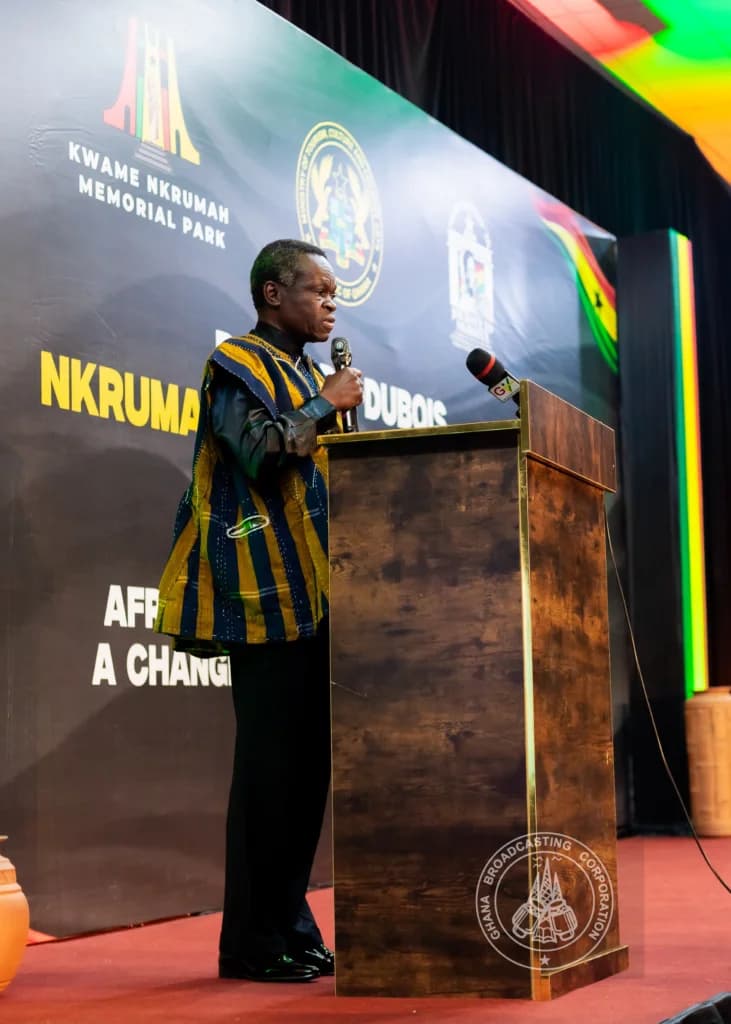
On September 16, 2026, Kenyan lawyer and academic Professor Patrick Loch Otieno (PLO) Lumumba delivered a stirring address at the Padmore-Dubois Nkrumah Memorial Lecture in Accra, Ghana. The Kenyan scholar used the occasion to call for a radical shift in Africa's approach to development, advocating for a return to the vision of Ghana's founding father, Kwame Nkrumah. Addressing a crowd that included Ghana’s Minister for Tourism, Hon. Abla Dzifa Gomashie, Lumumba emphasized that the continent remains in a state of economic subjugation, hindered by a lack of unity and an over-reliance on foreign powers and external financial institutions.
Lumumba’s critique focused heavily on the role of Western financial institutions in dictating African policies. He argued that the current pattern of seeking external partnerships has failed to yield meaningful benefits, instead leaving the continent vulnerable to global financial shifts. The professor lamented Africa’s persistent failure to industrialize and trade effectively within its own borders, pointing out that true economic independence cannot be achieved as long as African nations are fragmented and dependent on external aid. He underscored that ongoing conflicts across the continent further weaken the collective bargaining power required for global relevance.
The title of his lecture, "How Many Men Are Buried Thrice?", served as a powerful metaphor for the enduring but often neglected legacy of Kwame Nkrumah. Lumumba argued that Nkrumah’s foresight regarding Pan-Africanism and economic self-sufficiency is more relevant today than ever. He urged African leaders to move beyond performative declarations and embrace genuine industrialization and intra-continental trade. By revisiting Nkrumah’s writings and foundational principles, Lumumba suggested that Africa could finally break the cycle of dependency and foster a self-sufficient future for its people.
Despite the sobering assessment of Africa's current challenges, Lumumba closed his address with a message of optimism. He asserted that economic independence is an achievable goal if the continent’s leadership recommits to the principles of unity and self-reliance. Reinvigorating the pursuit of a united Africa, he echoed the sentiment "Yes we can," urging a new generation of leaders to reclaim their economic sovereignty. The event not only honored the legacies of Nkrumah, Padmore, and W.E.B. Du Bois but also served as a clarion call for Africa to define its own destiny in the 21st century.

