••
Veteran Actor Pete Edochie Honors Late President Rawlings and Critiques Ghana's Film Industry During Visit
•2 min read•4 sources
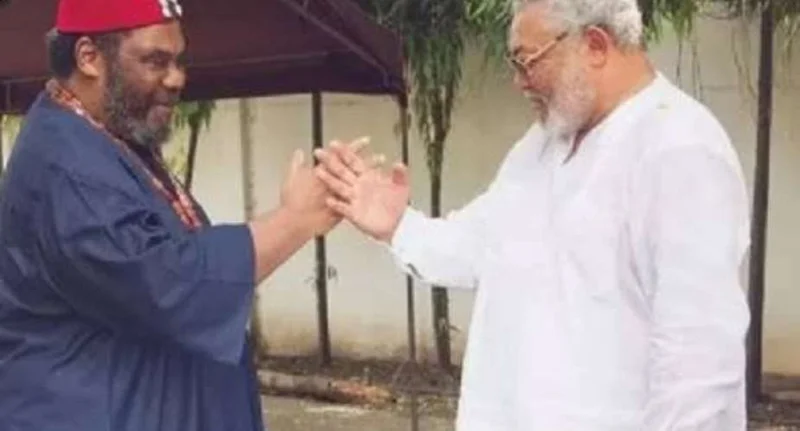
Legendary Nigerian actor Chief Pete Edochie has arrived in Ghana for the Accra Legacy Week, an event celebrating African culture and entertainment. Upon his arrival, the veteran performer described Ghana as his "second home," reflecting on a deep-seated connection to the country that spans decades. His visit is marked by a mixture of nostalgia and solemnity as he prepares to honor his long-standing ties with the nation and its people, while also engaging with the local creative community during his stay.
A central focus of Edochie’s visit is his tribute to the late former President Jerry John Rawlings, whom he described as a brother. The actor revealed that he and the late statesman were both born in 1947, just three months apart, and shared a bond that went beyond professional courtesy. Edochie expressed deep sadness over Rawlings' passing, admitting he initially doubted the news when it broke. He recounted a promised visit that never occurred due to the former President's death and stated his firm intention to visit Rawlings’ grave during this trip to pay his final respects.
While celebrating his personal ties, Edochie also shared a sobering assessment of Ghana’s current cinematic landscape. Despite the wealth of talent he observes in the country, the veteran actor expressed disappointment in the industry's struggle to thrive, stating, "I don't feel happy" about its present state. This critique comes at a time when the Ghanaian film industry is navigating significant economic and structural challenges, and Edochie’s perspective carries weight as a pioneer of African cinema who has witnessed the industry's evolution across the continent.
In addition to his official engagements at Accra Legacy Week, Edochie plans to use his time in Ghana to reconnect with industry colleagues and offer support to those in need. He specifically mentioned his intention to visit veteran Ghanaian actor Emmanuel Armah, who has been battling ill health. Interspersing his reflections with humor, Edochie also recalled historical moments of the Ghana-Nigeria rivalry, such as Ghana's 7-0 football victory over Nigeria in 1957. His visit underscores a broader commitment to fostering unity within the West African creative arts sector and honoring the legacies of those who shaped the region's history.


