Anansi News
HomeBriefsAsk GhanaTopicsTools
•
•

Stay Informed

Get AI-curated news briefs from Ghana delivered to your inbox every morning. Free forever, no spam.

Explore

  • Home
  • Briefs
  • About

Categories

  • Politics
  • Business
  • Sports
  • Entertainment
  • Africa

Features

  • Analysis
  • Cedi Rates
  • Dollar to Cedi
  • Ghana Gold Price
  • BoG Policy Rate

Topics

  • Armed Forces Recruitment
  • WAEC Results & News
  • Nana Ama McBrown
  • NDC News
  • All Topics

Legal

  • Privacy Policy
  • Terms of Service
Anansi News© 2026. All rights reserved.
Made withfor Ghana
education

Parliament's Education Committee Flags 'Exorbitant' Distance Learning Fees at Ghana's Public Universities

5th July•3 min read•5 sources
Parliament's Education Committee Flags 'Exorbitant' Distance Learning Fees at Ghana's Public Universities
  1. Home
  2. /Education
  3. /Parliament's Education Committee Flags 'Exorbitant' Distance Learning Fees at Ghana's Public Universities

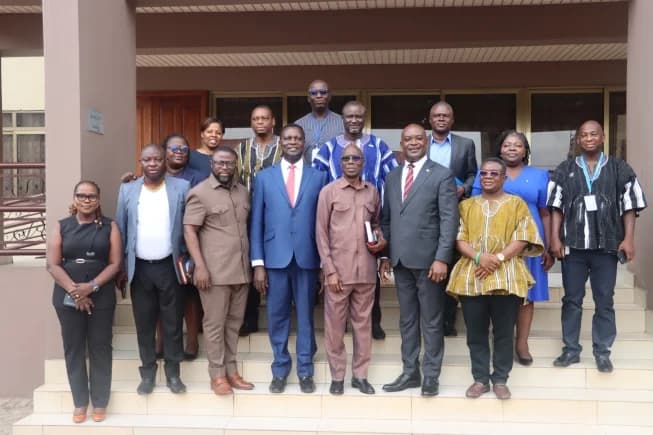
The Parliamentary Select Committee on Education has expressed grave concerns regarding the high cost of distance education programs in Ghana, characterizing the current fee structures as potentially exploitative. During a formal visit to the Ghana Tertiary Education Commission (GTEC) headquarters, Dr. Fred Kyei Asamoah, a member of the committee, highlighted a worrying disparity between the fees charged for distance learning and those for traditional, on-campus programs. The committee observed that distance education programs, which typically require fewer physical resources, are often priced significantly higher than regular programs, suggesting that universities may be prioritizing these offerings as a primary source of revenue rather than as a tool for accessible education. Beyond the financial burden on students, the committee raised alarms about the systemic incentives these high fees create. Members suggested that the lack of fee regulation for distance learning programs encourages public universities to prioritize these costly alternatives over traditional enrollment. This trend, they argue, risks turning tertiary education into a profit-driven venture that exploits students seeking flexible learning options. There is also a growing concern that the expansion of distance programs has not been matched by a focus on quality, with some committee members, including Dr. Yaw Osei Adutwum, pointing out that many graduates of these programs face significant challenges in the job market due to poor alignment between course content and industry needs. In response to these criticisms, the Director-General of GTEC, Professor Ahmed Jinapor, clarified the commission's current regulatory limitations. He explained that distance education fees currently operate under a market-based system and fall outside GTEC's direct jurisdiction, meaning the commission lacks the legal mandate to cap or control these costs. Prof. Jinapor also echoed the committee's concerns regarding the relevance of certain academic programs, noting that some universities continue to replicate international curricula that do not address local economic realities or job market demands. He stressed that without legislative intervention or a change in policy from Parliament, GTEC’s ability to curb these high costs remains restricted. To address these challenges, the Parliamentary Committee and GTEC are advocating for a more robust framework of accountability and quality assurance. This includes a proposal for GTEC to implement a formal ranking system for university programs, which would provide transparency regarding the success rates and market relevance of various courses. The goal is to ensure that students are receiving value for their investment and that the education sector effectively contributes to national development. Both parties emphasized the need for closer collaboration to reform the sector, ensuring that distance education becomes a viable, affordable, and high-quality path for Ghanaian students rather than a financial burden. Moving forward, the committee's findings are expected to inform potential legislative reviews aimed at granting GTEC more authority to regulate fee structures and enhance educational standards across the country.

Our Take

From the Team

Coming Soon

Our team will add key insights, trends, and actionable takeaways to help you stay informed faster.

This story touches markets covered on Anansi Intelligence ↗.

More from education

Continue exploring similar stories

AWAG urges SHS students to consider accountancy a rewarding career
education|Yesterday

Ghana Education Updates: GES Probes Mim SHS Misconduct, NSA Sets Service Deadline, and AWAG Promotes Accounting

The Ghana Education Service (GES) has initiated a formal investigation into allegations of sexual misconduct at Mim Senior High School in the Ahafo Region, while the National Service Authority (NSA) issues a final deadline for personnel to rectify registration errors. These critical administrative and safety developments coincide with vocational outreach efforts by the Association of Women Accountants, Ghana (AWAG), aimed at addressing the declining interest in business professions among secondary students. Together, these events reflect a broad spectrum of challenges and initiatives within the national education sector, ranging from student protection to career development. In the Ahafo Region, Samuel Jatong Larri, the Asunafo North Municipal Director of GES, confirmed that authorities are probing a reported incident involving a security officer and a female student. The officer allegedly approached the student for sexual activity, an act that sparked immediate outrage and led local youth to physically assault the suspect. The GES has since conducted interviews with both parties, ensuring the student was accompanied by her parents to provide a safe and documented environment for her testimony. Officials have emphasized that the student’s psychological well-being is a top priority as the investigation seeks to establish the full facts of the encounter and ensure that school safety protocols are strictly enforced. On the administrative front, the National Service Authority has opened a final correction window, ending August 26, 2026, for prospective personnel facing biodata mismatches. The NSA is collaborating with multiple agencies to assist students in obtaining necessary legal documents, such as affidavits and Gazette publications, to facilitate successful registration. Students are required to bring original documents, including Ghana Cards, to the NSA headquarters to resolve these issues before the deadline. Simultaneously, career guidance has taken center stage in the Ashanti Region, where Cecilia Bart Plange, President of the Ashanti Regional Chapter of AWAG, urged students at Kumasi Academy to consider accountancy as a rewarding career path. Noting a concerning trend where students favor nursing and teaching over business fields, Plange and Professor Richmell Baaba Amanamah highlighted the vital role of accountants across all economic sectors. These collective events highlight a pivotal moment for Ghanaian education, where the focus remains on ensuring the physical safety of students, streamlining bureaucratic transitions into the national workforce, and securing the long-term professional diversity of the nation. As the GES continues its probe and the NSA deadline approaches, educational stakeholders are working to maintain institutional integrity while encouraging the next generation to pursue specialized skills that will underpin the national economy.

GTA CEO partners publication of children’s tourism book
education|Yesterday

Ghana Tourism Authority and Ministry of Tourism Launch Educational Initiatives to Promote National Heritage Among Youth

Ghanaian tourism and cultural leaders are intensifying efforts to educate the younger generation on the nation’s rich history and tourism potential through a series of new educational initiatives. These efforts, led by the Ministry of Tourism, Culture and Creative Arts and the Ghana Tourism Authority (GTA), aim to foster a deeper appreciation for Ghana’s cultural identity. By utilizing both literary resources and the preservation of physical heritage sites, officials hope to provide children and youth with a comprehensive and balanced understanding of their roots while countering global misconceptions about the African continent. Central to this educational push is the upcoming launch of 'Ama Ghana,' a children’s tourism book designed to enhance awareness of the country’s diverse attractions. The Chief Executive Officer of the GTA, Maame Efua Houadjeto, collaborated with Adwinsa Publications and the Ghana Library Authority to produce the book, which is scheduled for release on August 28 during the 2026 Ghana International Book Fair at the National Theatre in Accra. This initiative is part of the broader Black Star Experience Programme, which uses storytelling to encourage young readers to explore Ghana's significant destinations and cultural sites, ultimately defining the nation’s identity through literature. In a complementary effort, the Minister for Tourism, Culture and Creative Arts, Abla Dzifa Gomashie, has called for a more deliberate approach to teaching history to both the youth and the African diaspora. Speaking during the announcement of a pilot project for the preservation of Osu Castle, Gomashie emphasized that heritage sites must serve as educational tools that narrate balanced histories rather than merely standing as static structures. This project, a partnership between the University of Ghana and the Danish National Museum, is backed by an initial funding of one million Danish kroner and aims to strengthen international ties while ensuring that the shared history between Ghana and Europe is accurately preserved and taught. These combined initiatives represent a strategic shift toward using education as a pillar for tourism and cultural preservation. By integrating historical narratives into children’s literature and revitalizing heritage sites with educational context, the government aims to build a more informed citizenry. These steps are expected to not only boost domestic tourism among the youth but also ensure that Ghana’s history is told from a perspective that honors its true legacy and informs its future path within the global community.

DVLA Deputy CEO Foster Kwesi Asante Named Top Graduate at GAFCSC Golden Jubilee as Ghana Prisons Service Launches Vocational Industries
education|Yesterday

DVLA Deputy CEO Foster Kwesi Asante Named Top Graduate at GAFCSC Golden Jubilee as Ghana Prisons Service Launches Vocational Industries

Foster Kwesi Asante, Esq., the Deputy Chief Executive Officer of the Driver and Vehicle Licensing Authority (DVLA), has been recognized as the Overall Best Graduating Student at the Ghana Armed Forces Command and Staff College (GAFCSC). This prestigious accolade was awarded during a joint graduation ceremony for the Master of Science in Defence and International Politics and Security Studies (MDIP/MSS) Class of 2026. The event was especially significant as it coincided with the institution's Golden Jubilee, marking fifty years of excellence in providing military and strategic leadership training within the West African sub-region. Mr. Asante’s academic success highlights his ability to balance a rigorous postgraduate program with his demanding executive role at the DVLA. During his time in office, he has been credited with implementing several customer-focused reforms, including the establishment of a Complaint and Feedback Centre and the extension of service hours to improve public accessibility and institutional responsiveness. As a trained lawyer with degrees from the University of Ghana and the Ghana School of Law, Asante also remains active in community service through the Next Gen Foundation, which he founded to empower future leaders. In a parallel development for the nation's educational and training landscape, the Ghana Prisons Service (GPS) has announced plans to establish five prison-based industries focused on inmate rehabilitation and skill acquisition. These industries will cover key vocational sectors such as tailoring, cabinetry, shoemaking, packaging, and prefabrication. The initiative seeks to transform existing training programs into commercially viable entities, allowing inmates to gain practical, hands-on experience that will serve them upon their reintegration into society. These two developments underscore a broad national focus on human capital development, ranging from high-level strategic security education for public officials to practical vocational training for marginalized groups. As Mr. Asante applies his advanced knowledge of international politics and security to his work at the DVLA, the Ghana Prisons Service’s shift toward industrialization represents a significant move toward a more sustainable and reformative justice system. Both efforts reflect a commitment to fostering technical proficiency and leadership across various strata of Ghanaian society.

GIMAT and CILT Champion Social Inclusion Through Health Education and Transport Accessibility Reform
education|Yesterday

GIMAT and CILT Champion Social Inclusion Through Health Education and Transport Accessibility Reform

The GIMAT Volunteer Network and the Chartered Institute of Logistics and Transport (CILT) are spearheading a national push for social inclusion through enhanced health education and improved transport infrastructure. From the "Biology of the Girl Child Summit" in Berekum to the 2026 CILT Annual General Meeting in Fiapre, advocacy groups are emphasizing the urgent need to address the knowledge gaps and physical barriers facing vulnerable populations. These initiatives highlight a unified effort to ensure that Ghana’s development is both inclusive and sustainable for young girls, the elderly, and people with disabilities (PwDs). Fortune Morkporkpor Adalevo, Summit Lead of the GIMAT Volunteer Network, has called for strengthened collaboration between parents, schools, and communities to support girls’ health and development. Speaking to over 1,500 attendees at a recent summit, Adalevo noted that many girls in underserved communities lack essential knowledge about reproductive health and personal development. To address this, the summit provided education on character building and reproductive rights, with Dr. Angel Abena Tiwaa Acheampong further warning against the dangers of unsafe abortions and encouraging girls to seek accurate health information to make informed life decisions. Parallel to these educational efforts, CILT President Alhaj Mohamed Saaka Dumba is advocating for fundamental changes to Ghana's transport architecture to accommodate PwDs. At the 2026 conference in Fiapre, Dumba highlighted the inadequacies of the current public transport system, specifically the lack of designated seating and traffic alarms for PwDs. He urged stakeholders to implement existing disability laws and consider inclusive improvements across air, marine, and rail transport. Traditional leaders, including Nana Addae Kuntuma IV and Odeneho Dr. Afram Brempong III, echoed these sentiments, calling for diversified transport systems to facilitate more equitable economic growth. Together, these calls for reform represent a comprehensive approach to social empowerment, linking educational awareness with physical accessibility. By addressing both the health education needs of the youth and the logistical challenges faced by the disabled and elderly, these organizations aim to create a more equitable society. As Ghana continues its developmental trajectory, the focus remains on ensuring that both infrastructure and community support networks are robust enough to protect and empower all citizens, regardless of their physical abilities or socioeconomic status.

All
africa
business
education
entertainment
health
news
politics
sports
technology