••
Parliament begins debate on GH₵389.2 billion 2027 Budget Statement
•3 min read•11 sources
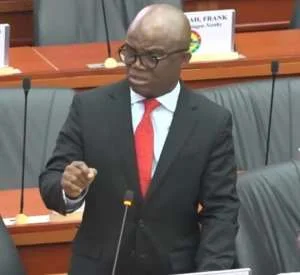
Parliamentary debate on the 2027 Budget Statement and Economic Policy has commenced, with the Majority and Minority caucuses trading blows over the GH₵389.2 billion fiscal plan. The budget, presented by Finance Minister Dr. Cassiel Ato Forson, targets a 5.2% GDP growth rate and introduces a US$10 billion economy program under President John Mahama’s "New Economy" agenda. While the Majority emphasizes fiscal discipline and productive investments, the Minority has raised alarms over what they describe as galloping national debt and a lack of transparency in job creation figures.
Dr. Mohammed Amin Adam, the former Finance Minister and Minority spokesperson on finance, spearheaded the opposition's critique, asserting that Ghana’s public debt has surged to $65.3 billion. He calculated that this equates to a liability of approximately GH₵23,000 for every Ghanaian citizen. Dr. Adam further claimed that the current administration added GH₵118 billion to the debt stock in just ten months, pushing the debt-to-GDP ratio from 44.7% to 47.5%. Former Deputy Finance Minister Abena Osei-Asare supported these claims, challenging the government's narrative of reduced borrowing by pointing to a $20 billion increase in public debt between 2025 and 2026.
The debate also focused on specific allocations, notably the GH₵165 million earmarked for the 24-hour Economy Secretariat. Dr. Amin Adam questioned the necessity of this funding, arguing that most relevant programs had been shifted to the New Economy policy, leaving the secretariat without a clear mandate. Similarly, Manhyia South MP Nana Agyei Baffour Awuah criticized the government for failing to provide specific employment figures in the budget, describing initiatives like the Women’s Development Bank as ineffective. These concerns were echoed by the Africa Policy Lens (APL), which noted that the budget lacks official labor data for 2026, making it difficult to verify the government's job creation claims.
Defending the government’s stance, Deputy Majority Leader Kweku Ricketts-Hagan accused the Minority of misrepresenting figures and insisted that the budget prioritizes long-term stability and economic transformation. He argued that the 24-hour Economy and New Economy initiatives are critical drivers for future growth. Dr. Stephen Amoah, MP for Nhyiaeso, while defending the previous NPP administration’s record post-COVID-19, urged the House to focus on the tangible impact of these policies on the living conditions of Ghanaians rather than abstract macroeconomic figures. NPP communications director Dennis Miracles Aboagye added to the friction by claiming the NDC had utilized $12.1 billion in loans within two years, compared to $20 billion used by the NPP over eight years.
As the debate continues, Minority MPs led by Annor Dompreh have sought to ground their arguments in local economic realities following a fact-finding visit to the Techiman Central Market. They reported that traders and transport operators are struggling with rising operational costs, contradicting the government’s positive outlook. The parliamentary deliberations are scheduled to conclude on November 25, when a formal vote on the budget proposals is expected.
modernghana.com
PrimarypoliticsStephen Amoah defends NPP’s economic record, accuses NDC of failing to translate stability
ghanaweb.com
politics‘Mr Speaker, look at my pocket; there’s no money’- NPP MP reports NDC gov’t to Parliament
ghanaweb.com
politics‘If government is not borrowing, how did debt hit $65bn?’ – Osei-Asare
ghanaweb.com
politics‘You should’ve used Ofori Atta’ – Netizens ‘blast’ Miracles Aboagye over NDC-NPP comparison
myjoyonline.com
politicsMinority MPs question government’s economic claims after Techiman market tour
modernghana.com
politicsNPP has always been a better manager of Ghana's economy – Dr Stephen Amoah
myjoyonline.com
politicsGH¢165m allocated to 24-hour Economy Secretariat despite shift to New Economy – Amin Adam
modernghana.com
politicsAmin Adam claims every Ghanaian now owes GH¢23,000 as public debt rises to $65.3bn
classfmonline.com
politics'Credibility on jobs depends on numbers that can be verified' - APL scolds Govt
modernghana.com
politicsManhyia South MP accuses NDC of failing to deliver on job creation promises
modernghana.com
politicsMajority, Minority clash over Mahama’s New Economy agenda during 2027 Budget debate
Related topic
NDC (National Democratic Congress): Latest News →
