••
Otumfuo Osei Tutu II seeks investment for GH₵2bn fashion industry
•2 min read•2 sources
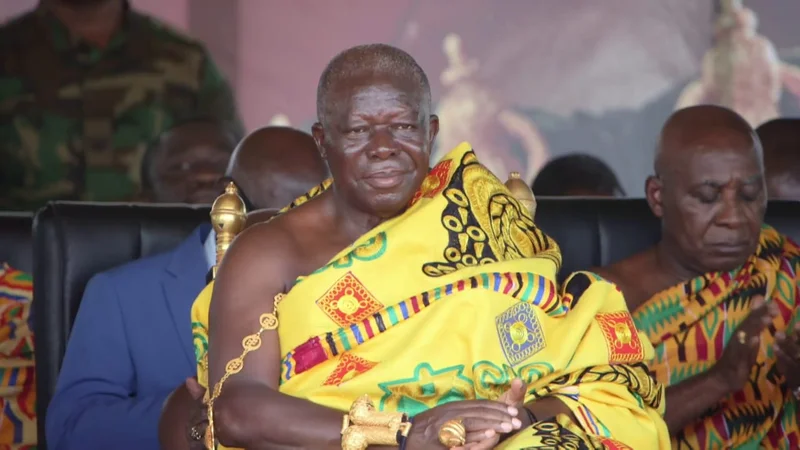
The Asantehene, Otumfuo Osei Tutu II, has called for significant capital injection into Ghana’s creative arts and fashion sectors, identifying them as critical drivers for economic growth and job creation. Speaking at Takoradi Technical University (TTU) during the Faculty of Applied Arts and Technology (FAAT) Week, the King highlighted the untapped potential of the local market. He noted that the fashion industry alone has the capacity to contribute GH₵2 billion to the national economy if properly supported by local manufacturing and investment.
Otumfuo expressed concern over the dominance of foreign goods and the relative absence of locally manufactured products in Ghanaian markets. He emphasized that for the creative sector to achieve its full economic potential, there must be a deliberate shift toward high-quality local production that preserves cultural identity while meeting modern standards. The Asantehene urged artists and designers to prioritize innovation and ensure their brands are competitive enough to challenge the influx of imported alternatives.
Addressing technical education, the King tasked TTU and other technical institutions with bridging the existing skills gap within the creative sector. He recommended a curriculum that blends traditional Ghanaian craftsmanship with contemporary production techniques to equip students with the tools needed for industrial-scale manufacturing. This approach, he argued, would transform the creative arts from a cultural pursuit into a robust economic pillar capable of sustaining thousands of livelihoods across the country.
As part of the celebrations held under the theme "Celebrating Heritage, Innovation, and Excellence," the Asantehene inaugurated the Otumfuo Osei Tutu II Art Museum on the university campus. The facility is intended to serve as a hub for artistic expression and the preservation of cultural heritage for future generations. University officials, including the Vice-Chancellor, reiterated their commitment to these goals, pledging to implement initiatives that recognize the creative arts as a formal economic sector.