••
Africa Prosperity Network Urges Economic Integration as UN Endorses Equal Earth Map for Cognitive Justice
•3 min read•3 sources
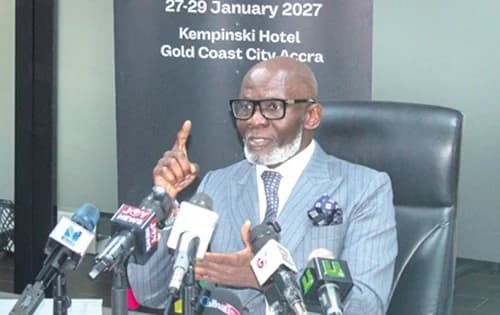
Africa is witnessing a dual push for better representation on the world stage and deeper economic integration within its borders. Gabby Asare Otchere-Darko, Founder and Executive Chairman of the Africa Prosperity Network, has issued a clarion call for African nations to move beyond the mere signing of treaties toward the active implementation of free movement and seamless cross-border payment systems. This domestic push for unity coincides with a significant international milestone: the United Nations' endorsement of the Equal Earth Map, a move designed to provide a more accurate representation of Africa’s true geographical scale, correcting centuries of cartographic distortion. Speaking at the launch of the Africa Prosperity Dialogue, Otchere-Darko emphasized that the ambition of a single African market remains in question as long as key agreements like the Abuja Treaty and the AU Free Movement Protocol lack full ratification and practical application. He urged West African nations, including Ghana, to lead the charge in harmonizing laws and regulations across states to enhance trade and movement. A critical component of this integration, according to Otchere-Darko, is the development of mobile money interoperability, which would allow Small and Medium-sized Enterprises (SMEs) to trade across borders with the same ease as domestic transactions. He argued that tearing down these physical and digital barriers is essential for the continent to realize its collective economic potential and competitive advantage. The quest for a more unified Africa is further supported by a symbolic but profound victory in the realm of cognitive justice. Led by Togo and supported by the African Union, a resolution was recently passed at the United Nations to adopt the Equal Earth Map. Developed in 2018, this map projection addresses the inherent biases of traditional world maps, which often diminish the size of Africa relative to northern landmasses. By accurately reflecting the relative sizes of countries, the UN endorsement is framed as an act of cognitive justice and memorial reparation, ensuring that the continent’s physical presence is correctly perceived by the global community. Together, these developments signal a broader movement toward African self-assertion and sovereignty. While the Equal Earth Map corrects the external perception of the continent, the Africa Prosperity Network’s focus on integration aims to transform its internal economic reality. As African leaders and organizations push for these structural and symbolic changes, the goal remains clear: transitioning from a continent of disparate markets and misrepresented geography to a unified economic powerhouse with a recognized global standing. The success of this transition will depend on the ability of member states to translate diplomatic resolutions and new maps into tangible benefits for the continent's citizens.

