••
Vice President Opoku-Agyemang Urges Preservation of Slave-Trade Sites to Advance Reparatory Justice
•2 min read•2 sources
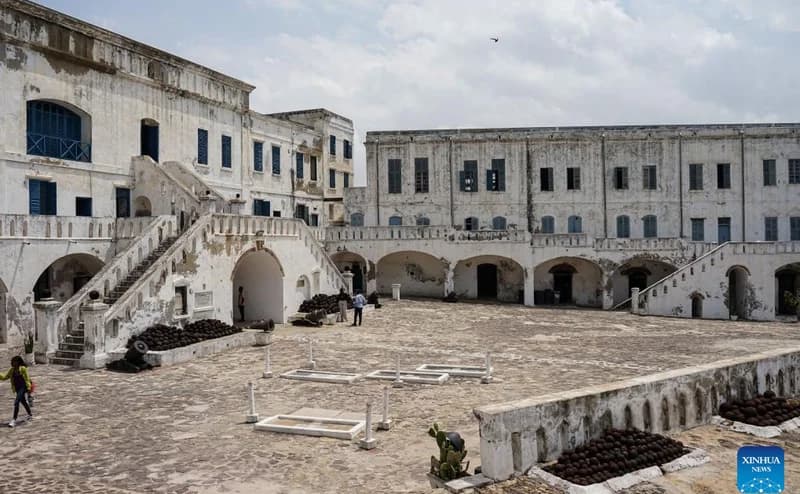
Vice President Professor Naana Jane Opoku-Agyemang has called on Ghana to uphold its duty as a custodian of history by preserving and accurately interpreting sites linked to the transatlantic slave trade. Speaking at a ceremony in Cape Coast, the Vice President emphasized that maintaining the country's forts and castles is essential for educating future generations about the systemic injustices faced by Africans. This call to action follows the adoption of United Nations General Assembly Resolution 82/50, which formally recognizes the trafficking and enslavement of Africans as a crime against humanity.
Prof. Opoku-Agyemang highlighted that Ghana's responsibility extends beyond the physical maintenance of prominent structures like the Cape Coast Castle. She urged for a "faithful representation" of history that balances the narratives of immense suffering with the enduring spirit of African resistance. To this end, she pointed to the significance of lesser-known locations such as Assin Manso and Sankana, which commemorate the resilience of African communities. By telling the full story of these sites, the Vice President argued that the nation can provide a more comprehensive account of the era, ensuring that the legacy of resistance is not overshadowed by the tragedy of enslavement.
The preservation of these historical landmarks is viewed as a cornerstone of a broader agenda for reparatory justice. Prof. Opoku-Agyemang noted that the UN's recognition of the historical atrocities creates a moral and historical responsibility for Ghana to move beyond recognition toward active engagement. She stressed the necessity of deepening historical, cultural, and economic connections with the African diaspora, framing these preservation efforts as a vital step in strengthening the ties between the continent and its descendants abroad.
Ultimately, the Vice President’s remarks underscore a commitment to historical justice and reconciliation. By documenting the physical evidence of the slave trade and the stories of those who resisted it, Ghana aims to provide a platform for healing and collective progress. These efforts are intended to ensure that the memory of the transatlantic slave trade serves as a catalyst for unity and the continuous pursuit of justice for people of African descent worldwide.