••
OpenAQ report reveals one in three countries lack air pollution monitoring
•2 min read•1 source
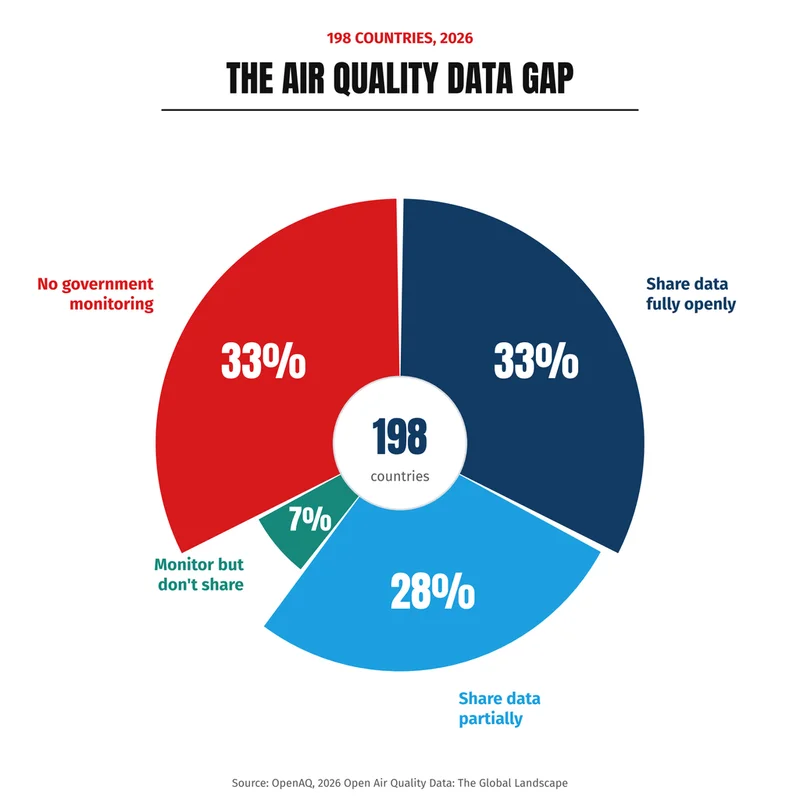
A global report by OpenAQ has revealed that one in three countries lacks a government-run system to measure air pollution, leaving nearly a billion people worldwide without access to official air quality information. Released on November 16, 2026, the study underscores a critical gap in public health infrastructure, particularly as air pollution-related illnesses contributed to an estimated 7.9 million deaths globally in 2023. While there has been a slight increase in monitoring coverage over the last two years, the lack of transparency and data remains a significant hurdle for health officials and the public.
The OpenAQ report indicates that 67% of countries currently monitor air quality, a marginal improvement from 64% in 2024. Despite this progress, Sub-Saharan Africa continues to show the largest monitoring gap, with many nations in the region lacking the necessary sensors to track harmful particulate matter and other pollutants. The report emphasizes that without reliable government data, communities are unable to assess the health risks they face or hold authorities accountable for environmental standards. In West Africa, however, some nations like Togo are being recognized for taking proactive steps to establish and improve their air quality monitoring frameworks.
A significant portion of the report focuses on the accessibility of environmental data. OpenAQ found that even among countries that do monitor air quality, only about one-third provide fully open access to the resulting data. This lack of transparency prevents researchers, healthcare providers, and citizens from utilizing information that could drive policy changes or individual health decisions. The report concludes with an urgent call for governments to prioritize the installation of monitoring systems and the sharing of open data to mitigate the staggering death toll attributed to poor air quality.