••
OpenAI Claims Breakthrough Solution to 90-Year-Old Navier-Stokes Mathematical Mystery
•2 min read•1 source
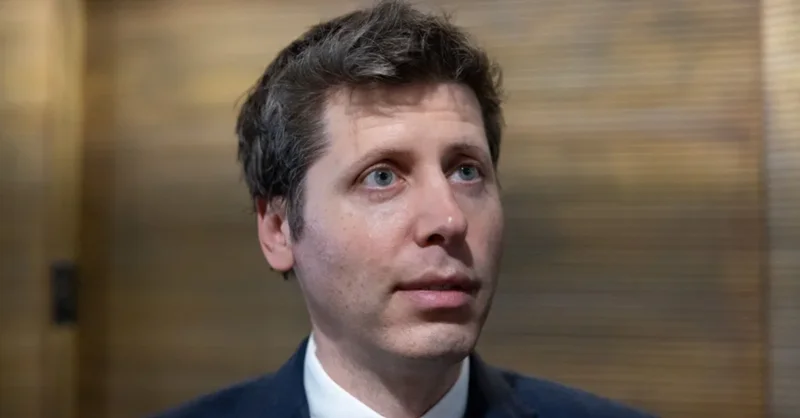
OpenAI has announced a significant milestone in artificial intelligence, claiming to have solved the Navier-Stokes existence and smoothness problem—a complex mathematical challenge that has remained unsolved for nearly a century. Utilizing a specialized new AI model and a massive swarm of approximately 10,000 AI bots, the organization reportedly cracked the problem in just 88 hours. While the claim represents a potential leap forward in computational capabilities, it currently awaits rigorous peer review and official verification by the global mathematical community, specifically the Clay Mathematics Institute. This development is being framed as a testament to the evolving power of AI in handling high-level abstract reasoning.
The Navier-Stokes equations describe the motion of fluid substances and are fundamental to physics and engineering. Solving the existence and smoothness problem is one of the seven "Millennium Prize Problems" designated by the Clay Mathematics Institute. Despite the prestige and the $1 million prize associated with a confirmed solution, OpenAI has stated that it does not intend to claim the monetary reward. This decision suggests the organization is prioritizing the demonstration of AI's problem-solving utility over financial incentives, though the move has stirred intense discussion among academics regarding the role of private companies in foundational science.
However, the announcement has been met with scrutiny and controversy. Tristan Buckmaster, a mathematician at New York University, has raised concerns regarding the timing of OpenAI's claim, alleging that the organization may have accessed information regarding his own team's ongoing research prior to making its announcement. OpenAI has firmly denied these allegations, clarifying that their work was conducted concurrently but independently. The company maintains that their AI-generated solutions differ significantly from those proposed by Buckmaster and his colleagues, and they emphasized that no private user data was accessed during the process.
As the mathematical world reacts to the claim, the next steps involve a lengthy and meticulous verification process. Historically, proofs for Millennium Prize Problems undergo years of scrutiny before being officially accepted. If OpenAI’s solution holds up under peer review, it would mark a historic shift in how fundamental scientific discoveries are made, moving from human-led derivation to AI-driven synthesis. For now, the technology sector and academia remain in a state of cautious observation, waiting to see if this "88-hour miracle" withstands the rigorous standards of traditional mathematical proof.
