••
Okyeame Kwame commends Bank of Ghana for featuring heroines on cedi notes
•2 min read•1 source
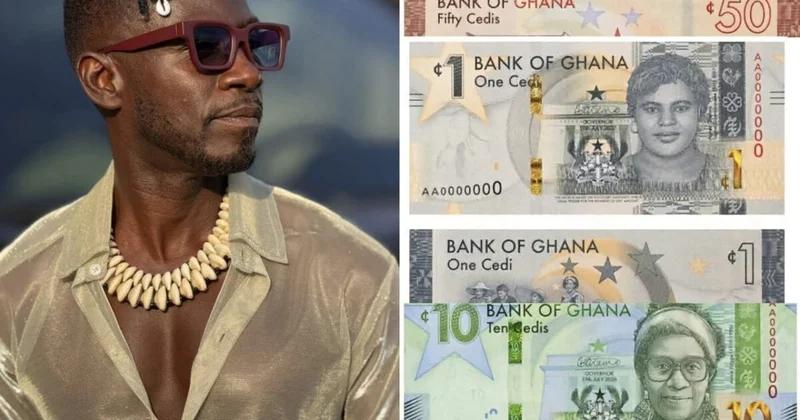
Ghanaian musician Okyeame Kwame has expressed his profound appreciation to the Bank of Ghana for its decision to feature prominent female historical figures on the country’s newly redesigned cedi notes. The artist, who has consistently used his platform to advocate for the preservation of Ghana's heritage, described the central bank's move as a significant milestone in recognizing the foundational contributions of women to the nation’s socio-political and economic development.
The redesigned currency features three distinguished women who have made indelible marks on Ghanaian history. Agnes Oforiwa Tagoe-Quarcoopome, a pioneering textile trader, is featured on the GH₵1 note. Justice Annie Ruth Jiagge, Ghana’s first female High Court judge and a renowned human rights advocate, appears on the GH₵10 note. Additionally, Theodosia Okoh, the celebrated designer of Ghana’s national flag, is honored on the GH₵50 note. Kwame noted that these inclusions serve as a powerful testament to the diversity of leadership and talent that has shaped the Republic.
This development serves as a personal victory for Okyeame Kwame, whose recent artistic endeavors have centered on similar themes of national pride and historical recognition. Through his songs "Clap" and "Ayekoo," the musician has sought to celebrate various Ghanaian icons, encouraging citizens to acknowledge the hard work and sacrifice of past leaders. By blending engaging melodies with insightful lyrics, Kwame has aimed to uplift and inspire listeners, particularly the youth, to contribute meaningfully to the country's progress.
The musician believes that honoring these heroines on the national currency ensures that their legacies remain visible and relevant to future generations. He emphasized that the Bank of Ghana’s initiative complements his advocacy by providing a permanent and tangible tribute to these women. This intersection of monetary policy and cultural recognition highlights a growing national commitment to inclusivity and the celebration of Ghana's rich historical narrative.
Live rates
Bank of Ghana policy rate →
