••
OECD PISA 2025 Report: Asian Students Lead Global Rankings as US Literacy Hits 25-Year Low
•2 min read•7 sources
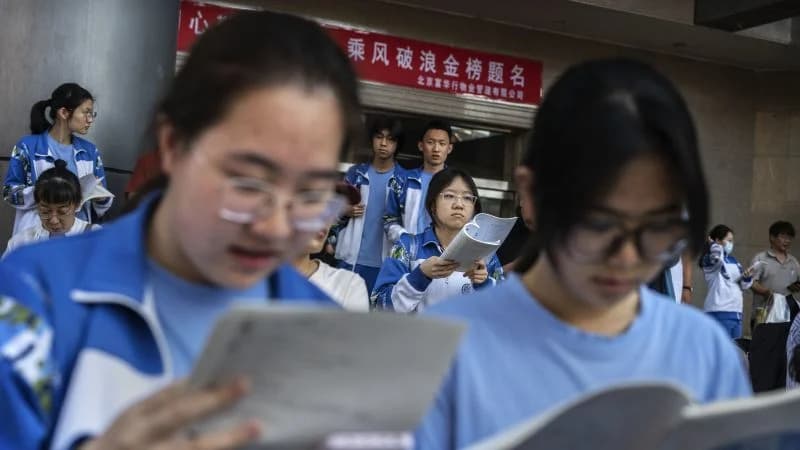
A newly released global assessment has revealed a widening educational divide, with high-school students in Asia significantly outperforming their Western counterparts in reading, science, and mathematics. According to the OECD’s 2025 Programme for International Student Assessment (PISA), students from Singapore, Japan, South Korea, and Chinese jurisdictions such as Beijing and Shanghai continue to dominate the rankings. Conversely, the report highlights a concerning decline in the United States, where reading scores for 15-year-olds have plummeted to near 25-year lows, raising urgent alarms for educators and policymakers regarding the future of Western educational standards.
The 2025 PISA findings underscore a global trend of deteriorating performance in foundational subjects, exacerbated by the rise of digital distractions in the classroom. Researchers noted a surge in 'hasty readers' and a decline in critical thinking skills, which are becoming increasingly vital in an era dominated by information overload. The report specifically points to the challenges posed by artificial intelligence (AI), emphasizing that while technology offers new tools, it may also be hindering the development of deep cognitive focus. Consequently, educational systems are under immense pressure to balance technological integration with traditional learning methods to ensure students remain competitive.
Beyond academic scores, the educational gap carries profound geopolitical and economic implications, particularly amidst the intensifying technological rivalry between the U.S. and China. The OECD suggests that a nation’s foundational educational performance is a direct predictor of its future workforce viability and economic prosperity. For instance, the report estimates a significant potential economic boost for the U.S. economy if its 15-year-olds could achieve even basic proficiency. As global competition for talent accelerates, the ability to synthesize complex information and apply critical logic is being viewed as the primary currency of the modern global economy.
These global shifts are prompting calls for urgent educational reform in emerging economies, including Ghana. As the country navigates its own development path under the current administration, the need to align national curricula with global competencies has become a priority to ensure human capital remains relevant in an AI-driven market. The report serves as a wake-up call for nations worldwide to modernize their educational frameworks, move beyond digital distractions, and prioritize the foundational cognitive skills necessary to navigate an increasingly complex and automated world.


