••
ODRO’S FOUNDATION and Kwahu East District Assembly Champion Inclusion with Major Donations for Persons with Disabilities
•2 min read•2 sources
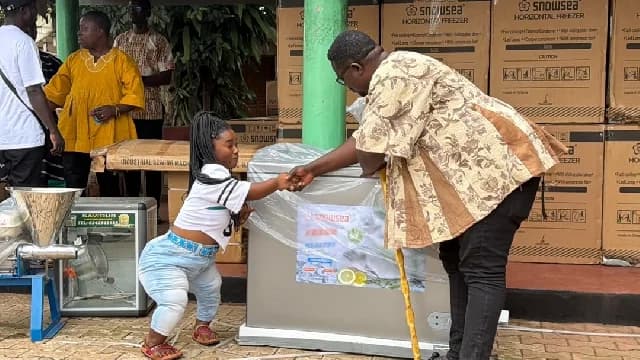
Efforts to empower Persons with Disabilities (PWDs) in Ghana have received a significant boost through dual initiatives in Cape Coast and Kwahu East. ODRO’S FOUNDATION recently celebrated its 16th anniversary by providing essential mobility and educational aids, while the Kwahu East District Assembly distributed specialized equipment to foster economic self-reliance. Together, these actions highlight a growing commitment across both the private and public sectors to remove barriers and enhance the dignity of PWDs within their communities.
In Cape Coast, ODRO’S FOUNDATION marked its 16-year milestone by distributing a wide range of assistive devices, including wheelchairs, walkers, and crutches. Recognizing the specific challenges faced by students, the foundation also provided mattresses and chopboxes to support the education of children with disabilities. CEO Mrs. Maame Samma Peprah emphasized that the initiative, which began in 2010, aims to ensure that beneficiaries can participate fully in society with independence and dignity. The foundation’s long-term commitment is centered on the belief that disability should not be a barrier to a productive life.
Parallel to these efforts, the District Chief Executive (DCE) for Kwahu East, Samuel Asamoah, has challenged PWDs in his district to transform government support into sustainable livelihoods. During a presentation ceremony funded by the Assembly’s Disability Fund, beneficiaries received items such as freezers and popcorn machines. Mr. Asamoah urged recipients to use these tools for their intended purposes, noting that the Assembly will monitor the impact of the donations. He further indicated that those who demonstrate effective use of the items could be eligible for additional support in the future to further scale their businesses.
While the beneficiaries expressed deep gratitude for the timely assistance, they also highlighted areas where further support is needed to address systemic challenges. Specifically, calls were made for increased aid for single mothers who struggle to balance caregiving for children with disabilities with the financial demands of their education. As these initiatives in Cape Coast and Kwahu East evolve, the focus remains on shifting the narrative from charity to empowerment, ensuring that PWDs are equipped with the resources necessary to build self-sufficient futures and contribute meaningfully to national development.