••
NSMQ 2026: Opoku Ware School Suffers Shock Exit Amid Team Walk-offs in Controversial One-Eighth Stage
•2 min read•2 sources
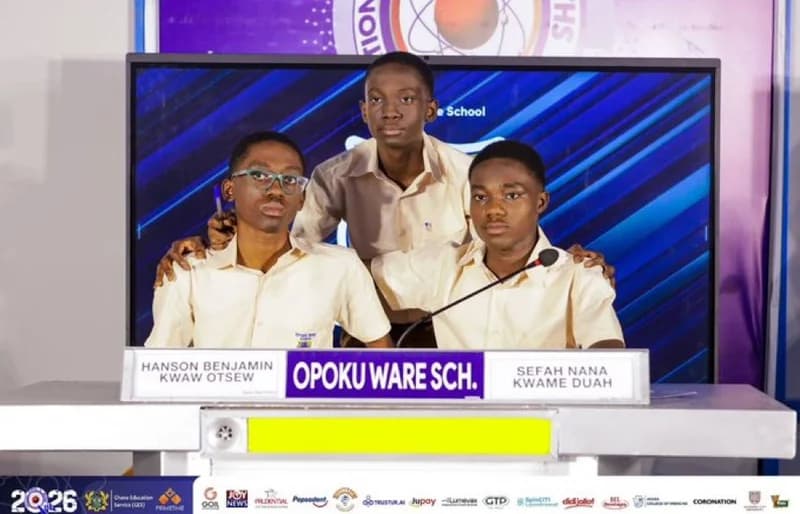
The 2026 National Science and Maths Quiz (NSMQ) has entered a period of unprecedented turbulence and surprises following the conclusion of the One-Eighth Stage. The competition, known for its academic rigor and school pride, witnessed the shock elimination of perennial powerhouse Opoku Ware School (OWASS) and an official walk-off by two schools during a heated contest. These developments have reshaped the landscape of the tournament as it moves toward the quarterfinals, leaving fans and analysts questioning the preparations and sportsmanship of some of the country’s top academic institutions.
Opoku Ware School’s exit came after a grueling match against Bishop Herman College and Asanteman Senior High School. Despite an initially strong performance, OWASS faltered in the later rounds, ending the session in a tie for last place and eventually losing in a decisive tie-breaker. Internal post-mortems suggest the school’s downfall was rooted in late preparation, which reportedly did not begin until late 2025. This delayed start, coupled with the school's absence from the zonal championships, appears to have robbed the contestants of the competitive edge and composure required for the national stage. For a school that has historically dominated the NSMQ, this early departure means they must now navigate the Ashanti Regional qualifiers next year to earn a spot in the 2027 competition.
Adding to the drama, Primetime Limited, the organizers of the NSMQ, officially addressed a major breach of protocol during Contest 9 of the One-Eighth Stage. In a statement released on August 28, 2026, the organizers confirmed the withdrawal of Anlo Senior High School and Kumasi High School. The two schools staged a walk-off during their match against St. Augustine’s College, an unprecedented move in the competition's history. While the specific grievances leading to the walk-off were not fully detailed, the official recognition of their withdrawal underscores the intensity and occasional friction found in the high-pressure environment of the quiz.
These incidents highlight the evolving nature of the NSMQ, where historical reputation no longer guarantees success and the pressure of the stage can lead to significant disruptions. As the remaining schools prepare for the quarterfinals, the 2026 edition is already being defined by the fall of giants and the need for stricter adherence to competition guidelines. For OWASS and the withdrawing schools, the path to redemption will be long, requiring a significant overhaul of their approach to the nation’s most prestigious academic competition.