••
Yaw Nsarkoh urges independent authority for superior court appointments
•3 min read•12 sources
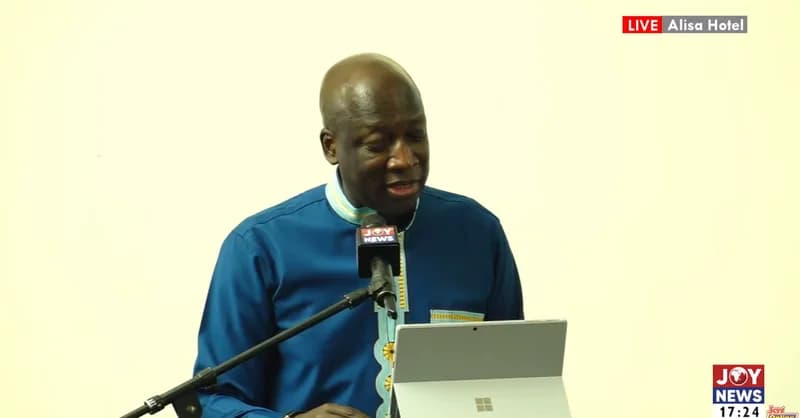
Yaw Nsarkoh, the former Executive Vice President of Unilever Ghana and Nigeria, has called for the establishment of an independent authority to manage appointments to Ghana’s superior courts. Speaking at a JoyNews event, Nsarkoh argued that the current system, which grants the President significant power over judicial selections, has made the bench vulnerable to "partisan capture." He emphasized that insulating the appointment process from executive influence is essential to restoring public confidence in the justice system and protecting the judiciary's role as a critical pillar of democracy.
Nsarkoh supported his call for reform with data from Afrobarometer, which indicates a sharp decline in public trust in the courts. Confidence has reportedly fallen from 61% in 2002 to 38% in 2022, with 57% of citizens now believing that political leaders influence judicial decisions. He pointed to the appointment practices of successive administrations as a driver of this perception, noting that more than 70% of Supreme Court justices serving between 2017 and 2024 were appointed by a single president. He suggested that involving retired Supreme Court justices in oversight and removal processes could help ensure greater impartiality.
Beyond judicial appointments, Nsarkoh advocated for broader systemic changes, including the creation of an independent prosecutor at the cabinet level. He criticized the current dual role of the Attorney-General, warning that being part of the Cabinet can turn the office into a mouthpiece for political projects rather than an independent seeker of justice. He also called for institutional protections to shield judges from arbitrary transfers or career stagnation, which he argued are often used as tools of pressure when rulings conflict with powerful political or economic interests.
Addressing the operational challenges of the judiciary, Dr. Valentin Mensah, a fellow in public financial management, warned that chronic underfunding is stalling justice delivery. He noted that although GH₵945 million was approved for the judiciary in 2024, only GH₵700 million was actually released. Nsarkoh added that simply increasing the number of judges is not a panacea for the system's delays. He urged for a comprehensive review of case flows, the adoption of technology for efficiency, and reforms in land administration to reduce the volume of disputes clogging the court system.
The speakers concluded that a robust and independent judiciary is not only a requirement for democratic health but also a necessity for economic growth. Nsarkoh warned that the state's failure to address fundamental governance issues—such as the illegal mining (galamsey) crisis and the protection of free speech—reflects a reactive political system. He called for a shift toward long-term governance solutions that prioritize accountability and the professional integrity of state institutions over short-term political gains.
