••
NPP and NDC Clash Over 3.9-Tonne Cocaine Seizure as NACOC Rejects Allegations of High-Level Collusion
•3 min read•13 sources
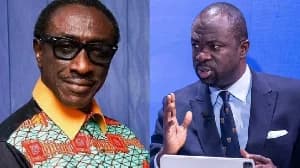
Ghana’s political landscape has been rocked by a massive narcotics scandal following the seizure of nearly 3.9 tonnes of cocaine at the port of Dunkirk, France, a shipment believed to have originated from Ghanaian shores. The record-breaking bust has ignited a fierce partisan debate in Parliament, with the New Patriotic Party (NPP) Minority demanding the immediate dismissal of security heads and a full parliamentary inquiry into the breach. However, the Narcotics Control Commission (NACOC) and the National Democratic Congress (NDC) Majority have pushed back, defending the integrity of the nation's security apparatus while highlighting significant enforcement successes achieved earlier in 2025.
Rev. John Ntim Fordjour, the Ranking Member on Parliament’s Defence and Interior Committee, has led the Minority's charge, claiming he warned the government in April 2025 about aircraft allegedly used for drug trafficking. Fordjour expressed dismay that his warnings were dismissed and alleged that he was subsequently targeted for arrest by the National Intelligence Bureau. Further heightening tensions, NPP MP Nana Agyei Baffour claimed to possess intelligence of a cocaine manufacturing hub within the country. This has drawn sharp criticism from legal practitioners and satirists alike, including Kwaku Sintim-Misa (KSM), who questioned why such critical information was being withheld from security agencies for political leverage rather than being shared to protect national security.
In a robust defense, Alexander Twum-Barimah, the Deputy Director-General of NACOC, categorically denied that the commission's leadership has been compromised. Speaking on JoyNews, Twum-Barimah dismissed Fordjour’s allegations as misinformation and clarified that recent operations have actually seen significant domestic interceptions, including 73 parcels of cocaine that were successfully prevented from leaving the country. He urged political actors to stop the "politicisation" of drug seizures, noting that narcotics trafficking is a global challenge that Ghana has battled across various administrations. Meanwhile, Majority Leader James Agalga attributed some of the current vulnerabilities to a 2018 policy under the former Akufo-Addo administration that removed NACOC from mandatory port inspections, an assertion that has been challenged by investigative journalist Manasseh Azure Awuni.
Amidst the accusations, civil society and former lawmakers have expressed deep skepticism regarding the effectiveness of a parliamentary probe. Dr. John Osae-Kwapong of CDD-Ghana and former MP Inusah Fuseini both warned that a partisan inquiry would likely yield no tangible results, citing a history of unproductive parliamentary investigations. They argued that the focus should instead remain on strengthening inter-agency cooperation and identifying systemic weaknesses to protect Ghana’s international reputation. As the fallout continues, calls for a unified, non-partisan approach to border security and narcotics control have intensified, with stakeholders emphasizing that the scale of the Dunkirk shipment suggests a sophisticated network that requires professional intelligence work rather than political blame-shifting.
Related topic
NDC (National Democratic Congress): Latest News →

