••
Ghanaians and Pan-Africans Mark Dr. Kwame Nkrumah’s 117th Birthday Amid Calls to Reclaim His Vision for Economic Independence
•2 min read•9 sources
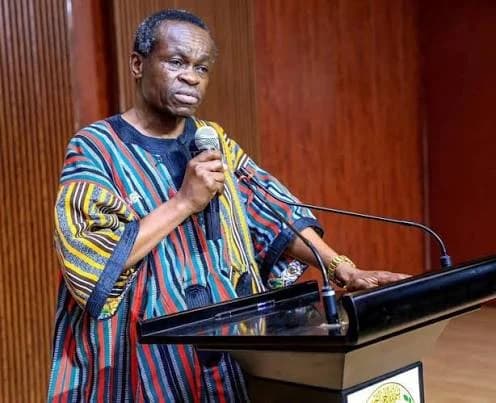
On September 21, 2025, Ghana observed Founder’s Day, commemorating the 117th birthday of its first President, Osagyefo Dr. Kwame Nkrumah. The statutory public holiday, restored by Parliament in June 2025, served as a focal point for Ghanaians and Pan-Africans to reflect on Nkrumah’s enduring influence on independence and continental unity. While the day was marked with celebrations across the country, it was also characterized by sobering assessments from scholars and legal practitioners who warned that Africa is drifting away from the core ideals of self-reliance and industrialization that Nkrumah championed during his tenure from 1957 to 1966.
Prominent Pan-Africanist Professor Patrick Loch Otieno Lumumba and legal practitioner Yaw Anokye Frimpong issued stern reminders that the continent risks "recolonization" without achieving genuine economic independence. Professor Lumumba emphasized that the fragmentation of African economies makes them vulnerable to external powers, urging current leaders and finance ministers to revisit Nkrumah’s writings to address contemporary economic crises. Similarly, Mr. Frimpong criticized modern African leadership for prioritizing narrow national interests over continental unity. He defended Nkrumah’s legacy against historical labels of dictatorship, arguing that his hardline decisions were often necessary responses to the neocolonial challenges of the post-independence era.
Professor Samuel Ntewusu, Director of African Studies at the University of Ghana, advocated for a non-partisan application of Nkrumah’s policies to modern development hurdles. He noted that Nkrumah’s original seven-year development plan (1963–1970) provides a still-relevant blueprint for state-led industrialization and human capital development. Under the current administration of President John Dramani Mahama, efforts are being made to align national programs in education, technology, and agriculture with these principles of local ownership. However, experts highlighted that genuine progress requires active citizen participation and a shift away from dependency on foreign-validated frameworks.
Beyond economic and political spheres, the 117th anniversary sparked discussions on the linguistic dimensions of independence. Analysts argued that the continued dominance of the English language reflects a deep cultural subjugation that stifles indigenous wisdom and innovation. To achieve true sovereignty, there are growing calls for a cultural revival through the reawakening of indigenous languages alongside political and economic reforms. As the continent looks toward the future, the consensus among speakers was that African youth must engage deeply with Nkrumah’s works to foster a united, competitive Africa that utilizes its own resources and intellectual authority.