••
National Cardiothoracic Centre performs Ghana's first TPVR
•2 min read•2 sources
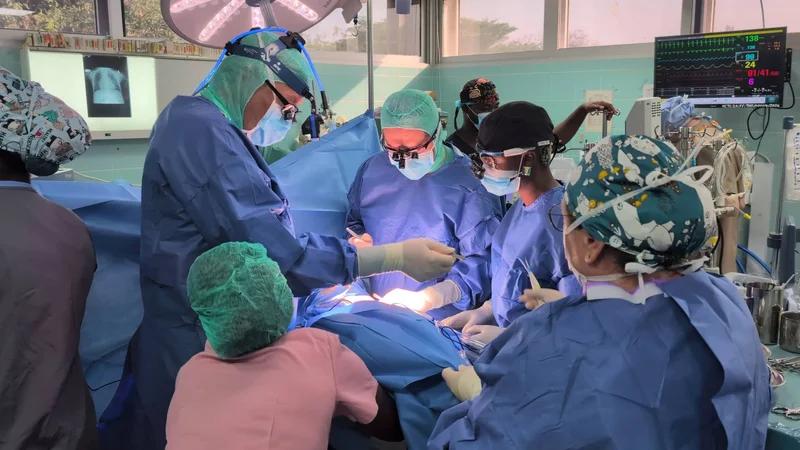
The National Cardiothoracic Centre (NCTC) at the Korle Bu Teaching Hospital has achieved a historic milestone in cardiac care by successfully performing Ghana’s first minimally invasive pulmonary valve replacement. This breakthrough procedure, known as Transcatheter Pulmonary Valve Replacement (TPVR), was performed on a 14-year-old girl suffering from severe pulmonary valve regurgitation. Unlike traditional methods, this advanced technique allows specialists to repair cardiac defects without the need for open-heart surgery, representing a significant leap forward for the nation's healthcare sector.
The procedure involved the implantation of a Harmony Valve, which was navigated through a blood vessel in the patient’s thigh to reach the heart. Dr. Kow Entsua-Mensah, a lead specialist at the NCTC, reported that the entire operation was completed in approximately one hour. Because the chest was not surgically opened, the patient is experiencing a significantly shorter recovery period compared to conventional surgical interventions. The medical team confirmed that the 14-year-old patient is recovering well and remains in stable condition.
This successful operation was made possible through a strategic partnership between the NCTC, Kinderherzen International, and the Gerald Asamoah Foundation. These collaborations are designed to enhance local medical capacity and provide advanced treatment options for children and adolescents with congenital heart conditions. By adopting these minimally invasive techniques, the NCTC is reducing the physical trauma and long-term risks associated with traditional heart surgeries for younger patients.
Following this achievement, Ghana joins a select group of countries worldwide capable of performing such highly specialized cardiac interventions. Dr. Entsua-Mensah emphasized that the NCTC plans to institutionalize these procedures, ensuring more Ghanaians have access to modern cardiac technology. The centre aims to continue its partnership with international foundations to conduct further interventions, ultimately improving survival rates and the quality of life for heart patients across the country.

