••
NCA Grants MTN Ghana 5G Spectrum for $109.9M Amidst Rising Congestion Crisis at Tema Port
•3 min read•2 sources
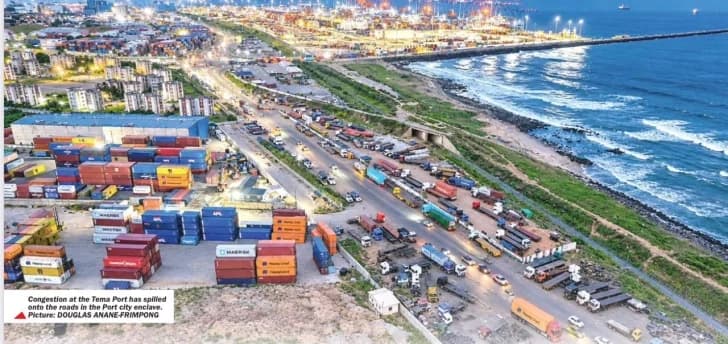
Ghana's business landscape is currently navigating a period of significant transition, marked by major advancements in digital infrastructure alongside growing logistical bottlenecks at the nation's primary maritime gateway. The National Communications Authority (NCA) has reached a milestone in the rollout of high-speed mobile broadband by assigning critical 5G spectrum to Scancom Plc (MTN Ghana). This acquisition of the 700 MHz band, valued at US$109.9 million, signals a major leap forward for the country’s telecommunications sector. However, this digital progress contrasts sharply with the physical challenges at the Tema Harbour, where a deepening congestion crisis is threatening to derail trade efficiency and increase the cost of doing business.
The NCA's licensing process for 5G spectrum has seen varied interest across different frequency bands. While MTN Ghana successfully secured the 700 MHz band, the NCA reported that the 2.3 GHz band remains under-subscribed despite attracting four applications. Conversely, the 3 GHz band has seen high demand, with the number of applications exceeding the available lots. The authority has indicated that the final outcomes for the remaining 2.3 GHz and 3 GHz bands will be announced once the licensing process concludes, potentially introducing more competition and capacity to Ghana's mobile data market.
On the ground, the situation at the Tema Port has reached a critical point, prompting urgent calls for intervention from the Ghana Ports and Harbours Authority (GPHA). The Ghana Institute of Freight Forwarders has reported that congestion within the harbour enclave has nearly tripled travel times for cargo transport. Nana Asiamah Peprah I, representing the institute, emphasized that these delays are significantly inflating operational costs—costs that are likely to be passed on to the final consumer. Beyond the economic impact, the spillover of trucks onto local roads has created a safety hazard, hindering emergency services from reaching nearby health facilities and disrupting the daily lives of residents and motorists.
To address these systemic delays, the Importers and Exporters Association of Ghana (IEAG) is advocating for the GPHA to utilize additional properties for container storage, thereby alleviating the current pressure on existing terminals. While the GPHA has announced plans to enhance operations, stakeholders insist that more aggressive measures are required to ensure the port remains a viable hub for international trade. As Ghana pushes toward a more connected future through 5G technology, the resolution of these physical infrastructure challenges at Tema remains essential for maintaining the country's economic competitiveness and supply chain stability.

