••
Nazir Ali's Eight-Year Solar Journey Highlights Potential and Hurdles for Ghana’s Renewable Energy Transition
•2 min read•1 source
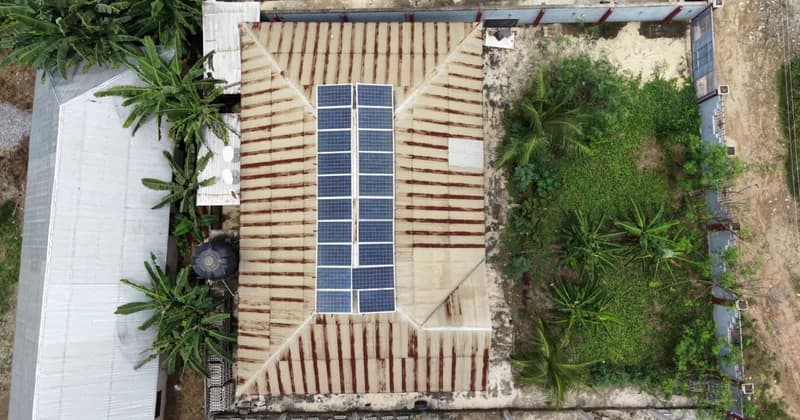
As Ghana grapples with the complexities of a transitioning energy landscape, individual success stories like that of Nazir Ali in Achiase, Ashanti Region, are providing a blueprint for household energy independence. Since 2018, Ali has powered his home almost exclusively through a private solar installation, shielding his family from the inconsistencies often associated with the national grid managed by the Electricity Company of Ghana (ECG). This long-term experiment serves as a critical case study for the nation as it explores ways to diversify its energy mix and reduce its reliance on traditional fossil fuels under the administration of President John Mahama.
The financial commitment to achieving this level of autonomy was significant; Ali invested approximately $7,000 to set up his solar infrastructure nearly eight years ago. Despite the high upfront cost, the investment has yielded substantial returns through a consistent power supply and a dramatic reduction in monthly electricity bills. For many Ghanaian households, Ali’s experience demonstrates that while the initial capital remains a significant barrier, the long-term reliability and cost-effectiveness of solar technology offer a viable alternative to the centralized grid system, especially in regions prone to intermittent service.
However, the path to widespread adoption is not without structural challenges. Prof. Samuel Gyamfi, an expert in the field, notes that while individual investments are rising, the national infrastructure requires significant upgrades to accommodate decentralized energy production. A major missing piece of the policy puzzle is the full implementation of a net metering system. Such a framework would allow homeowners to feed excess power back into the national grid in exchange for credits, effectively balancing their consumption and making solar investments more financially attractive to the average citizen.
As Ghana moves forward, the shift toward renewable energy is increasingly seen not just as an environmental necessity but as a strategy for national energy security. To transition from isolated success stories to a national standard, the government and energy stakeholders must address high entry costs and finalize regulatory frameworks. Nazir Ali's eight-year journey illustrates that while the technology is proven, the future of the energy sector depends on creating an ecosystem where decentralized solar power can seamlessly complement the national grid to provide stable, affordable electricity for all.
Related topic
John Mahama: Latest News & Updates →

