••
NASA Launches Nancy Grace Roman Space Telescope to Map the Cosmos and Discover 100,000 Exoplanets
•2 min read•1 source
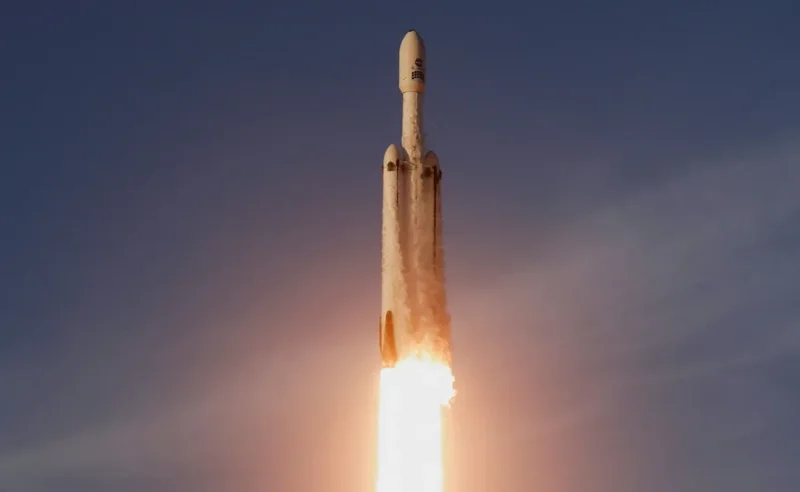
NASA has successfully launched the Nancy Grace Roman Space Telescope from the Kennedy Space Center in Florida, marking a significant milestone in astronomical exploration. Designed to probe the deepest mysteries of the cosmos, including dark energy and black holes, the telescope represents what mission officials describe as a giant leap forward in space science. It is named in honor of Dr. Nancy Grace Roman, NASA’s first female executive and a foundational figure in space astronomy, signaling a new era of wide-field infrared surveying that will complement existing observatories like the James Webb and Hubble telescopes. The telescope is expected to operate for at least ten years, providing a wealth of data to the global scientific community. The Roman Telescope distinguishes itself through its massive field of view, which is approximately 100 times larger than that of its predecessors, Hubble and the James Webb Space Telescope. This expansive vision allows it to capture vast swathes of the sky in a single image, facilitating extensive celestial surveys that would otherwise take decades to complete. By investigating the nature of dark matter and dark energy—forces that constitute the majority of the universe yet remain largely invisible—the telescope aims to provide definitive answers regarding the expansion and ultimate fate of our universe. Beyond cosmological questions, a primary objective of the mission is the discovery of new worlds. NASA scientists anticipate that over its projected lifespan, the Nancy Grace Roman Space Telescope could identify as many as 100,000 new exoplanets orbiting distant stars. By utilizing advanced surveying techniques, the mission will help astronomers understand the variety of planetary systems in our galaxy, potentially identifying Earth-like planets and expanding our knowledge of where life might exist in the universe. As the telescope begins its decade-long journey, the global scientific community anticipates a flood of data that will redefine current astrophysics. The mission is expected to revolutionize how we perceive the structure of the universe, from the behavior of massive black holes to the intricate distribution of galaxies. With its successful deployment, NASA moves closer to solving the fundamental puzzles of existence, ensuring that Dr. Roman’s legacy continues to inspire future generations of explorers.
