••
Vice-President Naana Jane Opoku-Agyemang Advocates for Diversified University Funding at National Higher Education Summit
•3 min read•4 sources
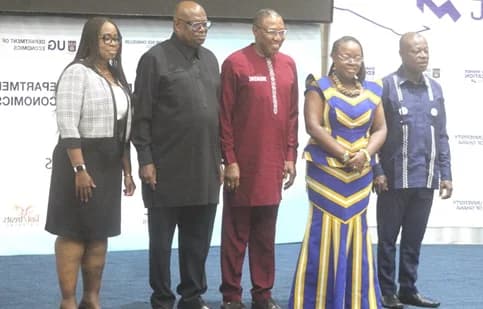
Vice-President Professor Naana Jane Opoku-Agyemang has called for an urgent shift toward diversified funding models to ensure the long-term sustainability and academic freedom of Ghana's universities. Speaking at the inaugural Ghana Higher Education Summit hosted by the University of Ghana, the Vice-President highlighted that the traditional reliance on government subventions and student fees is no longer sufficient to meet the challenges of rising enrollment, increasing operational costs, and the rapid need for technological advancement. She emphasized that innovative financing is essential to promote institutional resilience and ensure that Ghanaian universities remain competitive on a global scale.
The summit brought together a broad coalition of stakeholders, including Deputy Minister of Education Dr. Clement Apaak and University of Ghana Vice-Chancellor Professor Nana Aba Appiah Amfo. Dr. Apaak noted that while universities are indispensable to national development, they are currently operating under severe constraints due to limited public resources. Adding a cautionary perspective, Emeritus Professor Ernest Aryeetey warned that the current financial strain risks exacerbating social inequalities. He noted that without a rethink of the funding structure, the burden of inadequate resources could disproportionately affect students from poorer households, potentially widening the gap in educational access.
To mitigate these pressures, education leaders proposed moving beyond traditional models toward a mix of grants, industry partnerships, and revenue generation through university innovations. Strategies discussed included research commercialization, performance-based funding, and increased engagement with alumni and philanthropic organizations. Vice-President Opoku-Agyemang reiterated the government's commitment to quality education, citing initiatives such as the Ghana National Research Fund and policies designed to improve access to tertiary education without placing undue stress on students.
The urgency of establishing sustainable funding is further underscored by the challenges facing Ghanaian students currently studying abroad. At the University of Memphis in the United States, several scholarship beneficiaries are facing the threat of dismissal and restricted access to academic services due to unpaid tuition and accommodation fees. These students have issued an urgent plea to the Scholarship Secretariat and the government for intervention, highlighting the real-world consequences of funding delays and the necessity for more reliable financial management within the sector.
Moving forward, the University of Ghana intends for the Higher Education Summit to serve as an ongoing platform for addressing these systemic challenges. By fostering a collaborative approach involving government, industry, and academia, the state aims to develop actionable strategies that balance academic quality with inclusive access. The successful transition to a diversified funding model is viewed as a critical step in securing the future of higher education as a pillar of Ghana’s knowledge-based economy.


