••
Naana Adiki Manyeyo Adi I leads campaign to end child marriage in Ada East
•2 min read•2 sources
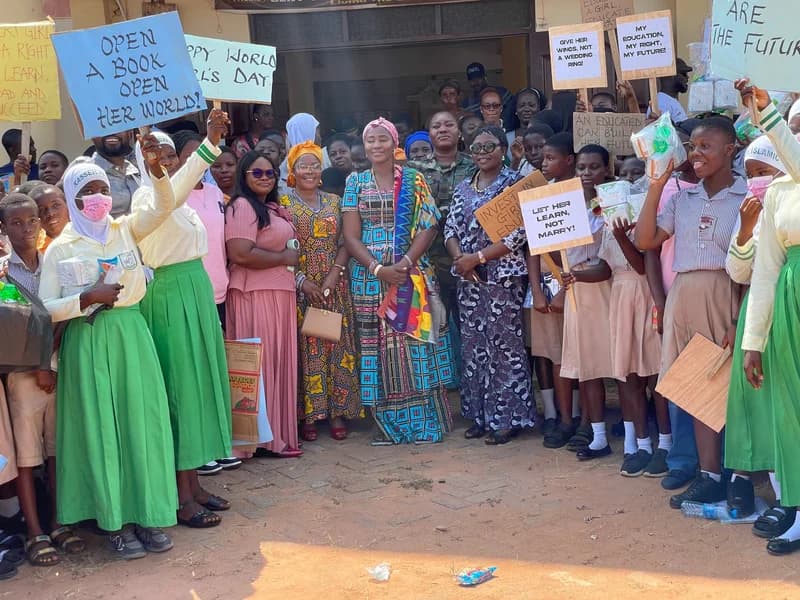
Naana Adiki Manyeyo Adi I, the Queen of the Royal Adibiawe and President of the Ada Queen Mothers’ Consortium, has spearheaded a campaign to eradicate child marriage in the Ada East District. Organized to commemorate the International Day of the Girl Child under the theme "End Child Marriage and Invest in Girls’ Rights," the initiative brought together the National Commission for Civic Education (NCCE), local traditional leaders, and parents to advocate for the protection and education of young girls.
The NCCE District Director, Madam Faustina Blewusi, underscored the legal and moral imperatives of the campaign, asserting that child marriage is a direct violation of constitutional protections. She identified poverty and deep-seated cultural misconceptions as primary drivers of the practice in the region. Blewusi urged stakeholders to shift their focus toward prioritizing girls' education, noting that the empowerment of young women is essential for the community's socio-economic development and long-term stability.
Reinforcing these sentiments, Naana Adiki Manyeyo Adi I challenged community members and parents to recognize the immense potential of girls beyond the confines of early marriage. She emphasized the need for a collective commitment to safeguard children and called for increased parental supervision to mitigate the risks girls face. To support the participants and promote health and dignity, the Queenmother distributed sanitary pads and snacks during the event, highlighting how practical barriers such as menstrual hygiene management can often impede a girl's ability to stay in school.
The event concluded with a call for greater advocacy by men for girls' safety and a renewed pledge from parents to monitor their children more closely. By addressing the root causes of child marriage through both education and advocacy, the Ada Queen Mothers’ Consortium and the NCCE aim to foster a societal shift in how girls' futures are perceived. Participants agreed that securing the rights of the girl child is not merely a local priority but a necessary step toward upholding national standards of justice and equality.
