••
Myanmar found guilty of genocide by International Court of Justice
•2 min read•2 sources
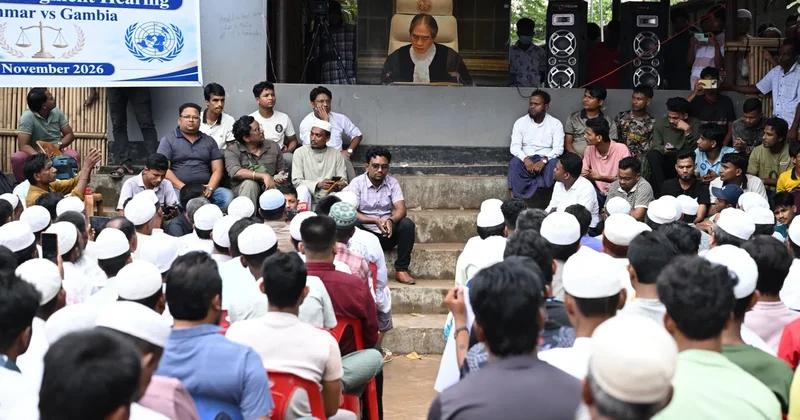
The International Court of Justice (ICJ) has delivered a landmark ruling, finding the state of Myanmar guilty of genocide against the Rohingya minority. This judgment marks the first time an international court has convicted a sovereign state of genocide. In a verdict delivered by a 9-6 majority, the panel of judges led by President Yuji Iwasawa concluded that Myanmar violated the 1948 Genocide Convention during a 2017 military campaign. The court found that the military acted with a specific intent to destroy a significant portion of the Rohingya population.
The case, which was brought before the UN’s top court by The Gambia seven years ago, centered on a series of atrocities that forced more than 700,000 Rohingya to flee to Bangladesh. The ICJ acknowledged extensive evidence of mass killings, sexual violence, and the systematic burning of homes. According to the court, these military operations were not merely a response to local security threats, as Myanmar had claimed, but were instead indiscriminate actions designed to erase evidence of massacres and displace the Muslim minority group.
Human rights advocates and international leaders have hailed the decision as a critical step toward accountability. UK Foreign Secretary Ed Miliband indicated that the international community would take further action against Myanmar following the ruling. Despite Myanmar’s persistent denials and its assertion that military operations were a legitimate response to terrorism, the court’s findings provide a formal legal acknowledgment of the suffering endured by the Rohingya people over the past decade.
However, the practical implications of the ruling remain complex. While the verdict significantly damages Myanmar’s international standing, the ICJ lacks an independent mechanism to enforce its decisions on the ground. Furthermore, Myanmar is not a signatory to the International Criminal Court, making The Gambia’s approach through the ICJ a unique legal precedent. For the hundreds of thousands of Rohingya still living in temporary camps, the ruling offers a moral victory, though the path toward a safe return to their homeland remains fraught with political and security challenges.
