••
Local Leaders Strengthen Educational Access and Support for High-Performing Students Nationwide
•3 min read•6 sources
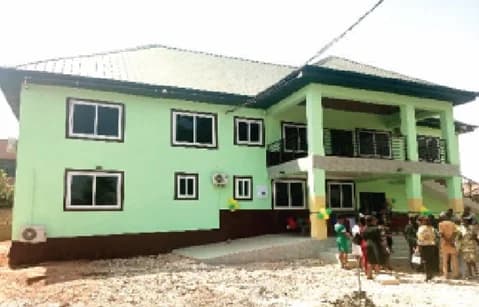
Local government officials and Members of Parliament across Ghana have intensified efforts to bolster educational outcomes through significant infrastructure investments and direct support for high-performing students. In the Asawase constituency, Member of Parliament Alhaji Mohammed Mubarak Muntaka recently commissioned new classroom facilities, reaffirming his commitment to ensuring that no child is left behind. During the event, Muntaka, who has served for 25 years, highlighted the transformative power of education and announced plans for an annual Municipal Teachers’ Awards Scheme to recognize exceptional educators. He urged students to remain focused on their studies and avoid substance abuse, noting that his long-term investments in education are already producing a new generation of professionals within the community.
Simultaneously, the Adentan Municipal Assembly has inaugurated three major educational projects alongside a new health facility to enhance local service delivery. Under the leadership of Municipal Chief Executive (MCE) Ella Esinam Christine Nongo, the assembly opened two 18-unit classroom blocks at the Adentan Community School and Otano Presbyterian Basic School, as well as a new Kindergarten block for the Ashieye Model School. MCE Nongo emphasized that while modern infrastructure is vital, it must be complemented by quality teaching and adequate resources. The initiative was supported by local stakeholders, including Mahamud Ya-AdzGey, who donated educational supplies to help equip the new facilities.
To ease the transition from basic to secondary education, several leaders have launched reward schemes for top performers in the 2026 Basic Education Certificate Examination (BECE). In the Wulensi constituency, MP Stanley Yaw Nandaya provided essential school items—including mattresses, buckets, and exercise books—to 100 students who achieved aggregates between six and 25. Similarly, in the Kpandai District, District Chief Executive Haruna Abdul-Karim presented support packages to 61 brilliant candidates who scored between six and 12. Notably, 53 of the Kpandai beneficiaries were girls, a trend the DCE cited as evidence of the increasing academic potential of young women in the district.
These coordinated efforts by MPs and District Executives reflect a broader strategy to break the cycle of poverty through academic excellence and improved infrastructure. By alleviating the financial burden on parents during the Senior High School admission process and expanding the physical capacity of local schools, officials aim to create a more equitable educational landscape. As these new facilities begin operation and students transition to higher levels of learning, the focus remains on sustaining these gains through community engagement and the continued motivation of both learners and teachers across the country.


