••
Ghana Health Sector Under Scrutiny: MoFFA Issues Ultimatum to Unlicensed Mortuaries as SafeCare Advocates for Enhanced Patient Safety
•2 min read•2 sources
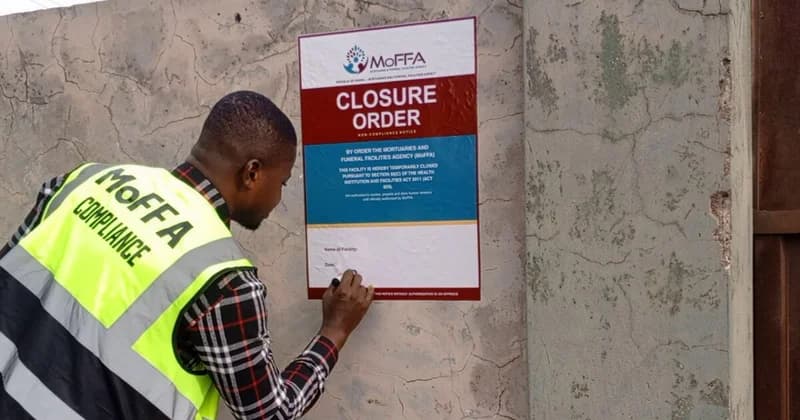
Ghana’s healthcare and funeral service sectors are facing a renewed push for stringent safety and regulatory compliance as authorities and advocates demand higher standards of care. The Mortuaries and Funeral Facilities Agency (MoFFA) has issued a 10-day ultimatum to unlicensed mortuary facilities in the Ashanti Region, requiring them to regularize their operations or face severe legal consequences. This directive follows recent inspections that revealed critical lapses in occupational health, safety protocols, infection prevention, and environmental sanitation across several facilities in the region.
MoFFA's intervention underscores a broader effort to safeguard public health by ensuring that all funeral facilities adhere to established national guidelines. While some operators were commended for maintaining high standards, others now face penalties including heavy fines and potential imprisonment if they fail to meet the 10-day deadline. The agency has emphasized that these measures are non-negotiable components of the public health infrastructure, aimed at preventing the spread of infections and ensuring the dignified handling of remains.
Parallel to these regulatory actions, Bonifacia Benefo Agyei, the SafeCare Country Director for PharmAccess, has called for measurable improvements in patient safety, particularly regarding the management of non-communicable diseases (NCDs). Speaking at a World Patient Safety Day event organized by the Ghana Health Service, Agyei highlighted a concerning global statistic: one in ten patients is harmed during the delivery of healthcare, with many of these instances being preventable. She pointed to the complexities of managing chronic conditions like hypertension as a primary area where patient safety must be prioritized through consistent and high-quality interactions.
To address these systemic challenges, advocates are championing the use of international benchmarks and digital innovations. PharmAccess is promoting the use of platforms like NkwaPlus for enhanced patient monitoring and value-based care models. Additionally, the Medical Credit Fund is providing essential financial support to healthcare providers, enabling them to acquire the resources necessary for service improvements. These combined efforts from MoFFA and SafeCare reflect a nationwide drive toward greater accountability and the institutionalization of safety across all levels of the Ghanaian health delivery system.