••
Canada Imposes $28 Billion in Retaliatory Tariffs on U.S. Goods as Global Oil Prices Surge
•2 min read•2 sources
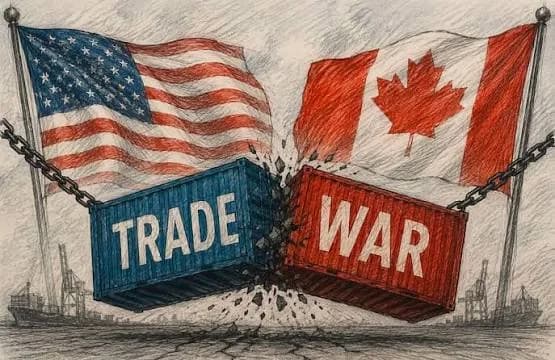
Canada has signaled a firm stance against the United States by imposing retaliatory tariffs on approximately $28 billion worth of American goods. Prime Minister Mark Carney characterized the move as a defense of national sovereignty following failed negotiations and what he described as "unfair" demands from Washington. The tariffs, which range from 15% to 50%, target more than 700 products, including machinery and everyday consumer items, marking a significant escalation in North American trade relations. This "red line" approach underscores Canada’s refusal to allow its economic autonomy to be compromised during bilateral negotiations.
While the Canadian government intends for these measures to safeguard national interests, officials acknowledge the potential for financial strain on domestic businesses and households. To mitigate the impact of rising retail prices and operational costs, Ottawa has introduced a C$7.5 billion support package for affected workers and sectors. Experts warn that the deep economic interdependence between the two nations makes a prolonged conflict risky, emphasizing the need for a balanced, rules-based relationship that avoids placing an unjust burden on Canadian consumers.
Parallel to the trade tensions in North America, global energy markets are facing renewed volatility. Oil prices rose on Tuesday as escalating geopolitical tensions in the Middle East, particularly threats of retaliation from Iran against the U.S., sparked supply concerns. Brent crude futures increased to $97.49 a barrel, while U.S. West Texas Intermediate crude climbed 1.6% to $92.92. Analysts, including those at Goldman Sachs, have adjusted price forecasts upward, predicting that disruptions to Middle East shipping could keep prices elevated through the end of the year and into 2027.
These developments highlight a period of heightened economic uncertainty, where both regional trade disputes and global geopolitical conflicts are reshaping market dynamics. For Canada, the challenge remains finding a diplomatic off-ramp to resolve the impasse with the U.S. without yielding on matters of principle. Simultaneously, the rising cost of energy adds another layer of pressure on global inflation and supply chains, forcing businesses and policymakers to navigate a complex and increasingly volatile international landscape.


