••
Mark Bediako urges stricter supervision to prevent building collapses
•2 min read•1 source
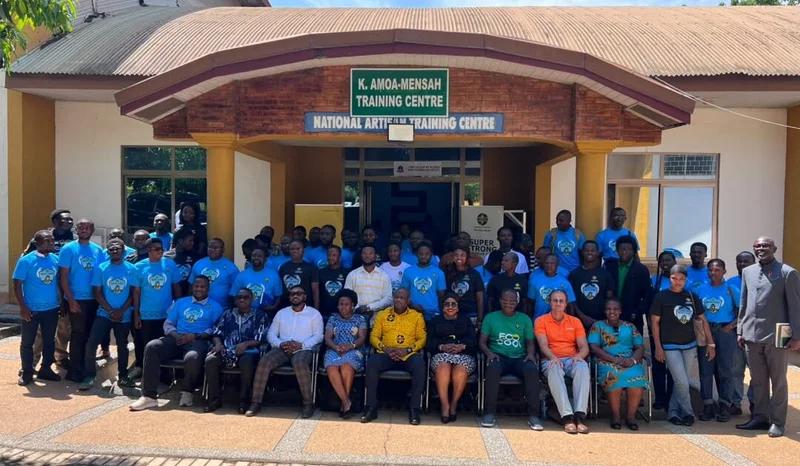
Ing. Professor Mark Bediako, a researcher from the Council for Scientific and Industrial Research (CSIR), has raised critical concerns over the effectiveness of engineering supervision and the general understanding of concrete quality within Ghana’s construction industry. Speaking against the backdrop of frequent building collapses across the country, Professor Bediako emphasized that the lack of rigorous oversight and poor construction practices are undermining the safety of structural projects. He identified these gaps as significant contributors to the failure of buildings, which often result in the loss of lives and property.
His remarks were made during the "Concrete Made Right" training initiative, a program designed to enhance the technical capacity of construction professionals. The training specifically targets engineers within district assemblies, who are often on the front lines of approving and inspecting local projects. Professor Bediako argued that for building standards to improve, there must be a fundamental shift in how concrete is produced and how supervision is conducted at every stage of the construction process. He noted that even with the best designs, a lack of adherence to regulations during the physical execution phase leads to structural instability.
Supporting these views, Dr. Bennetta Koomson from the Kwame Nkrumah University of Science and Technology (KNUST) highlighted that technical expertise alone is insufficient without a strong foundation of professional ethics. She stressed that engineers must resist compromising on quality for short-term gains. Additionally, Kofi Kyere, representing cement manufacturer GHACEM, pointed out a common misconception in the industry: that using high-quality cement automatically guarantees high-quality concrete. He explained that without proper mixing, curing, and general construction practices, the inherent quality of the raw materials is lost.
To address these systemic issues, Professor Bediako called for a collaborative effort among all stakeholders in the construction sector, including regulatory bodies, academic institutions, and private industry players. He urged district assemblies to ensure their engineering staff are not only well-trained but also strictly empowered to uphold national building regulations. By fostering a culture of accountability and continuous professional development, the initiative seeks to establish a more resilient construction sector and significantly reduce the occurrence of structural failures in Ghana.

