••
Hundreds March in Durban as 'March by March' Group Demands Immediate Deportation of Undocumented Immigrants
•2 min read•1 source
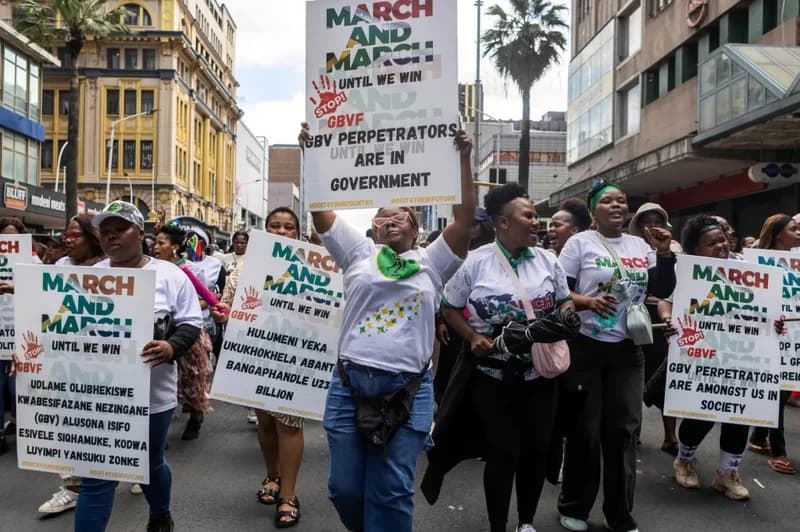
Hundreds of demonstrators took to the streets of Durban, South Africa, on Wednesday, October 4, 2023, to demand more aggressive government action against illegal immigration. Organized by the "March by March" movement, the protest followed the expiration of a self-imposed September 30 deadline for undocumented individuals to leave the country—an ultimatum that the South African government officially refused to recognize. The demonstration highlights a growing wave of public frustration over immigration policies and their perceived impact on national stability, economic opportunity, and public resource management.
Led by Jacinta Ngobese-Zuma, the protesters voiced specific grievances regarding porous borders, high unemployment rates, and rising crime, which they attributed to the presence of undocumented migrants. While the marchers brandished traditional Zulu weapons and performed cultural songs, the event remained non-violent under police monitoring. The movement's leadership emphasized that the government must become more responsive to citizens who feel that public infrastructure and the labor market are being overstretched by unregulated migration from neighboring nations.
Beyond immigration, the demonstration served as a platform to address other pressing social crises, specifically the alarming rise in femicide and gender-based violence (GBV) across the country. Protesters highlighted recent murders of women, including high-profile cases in Ekurhuleni, to underscore a broader sense of insecurity and a perceived lack of protection for South African citizens. By linking immigration concerns with public safety and the protection of women, the organizers sought to highlight a comprehensive breakdown in law and order.
The ongoing tension over immigration continues to carry significant geopolitical consequences, particularly regarding South Africa's diplomatic relations with other African nations, such as Nigeria. While authorities have reported thousands of recent deportations, they face the delicate task of balancing domestic populist demands with the requirements of regional cooperation and continental diplomacy. As previous anti-immigration protests have occasionally escalated into xenophobic violence and mass repatriations, the government remains under intense pressure to implement sustainable reforms while preventing further social unrest.