••
President Mahama Outlines Bold Vision for Africa’s Global Leadership and Economic Sovereignty at 81st UN General Assembly
•3 min read•28 sources
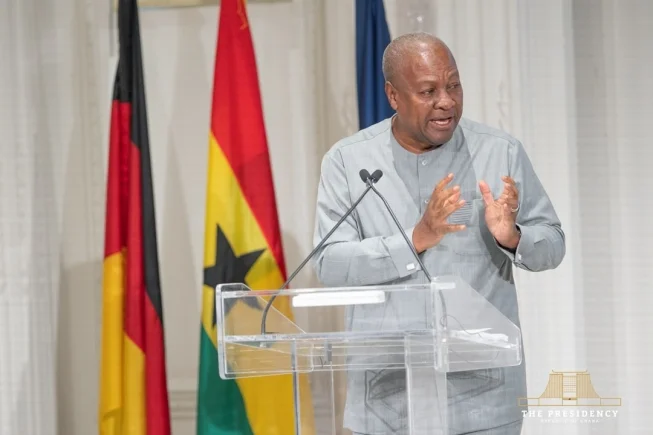
Addressing the 81st United Nations General Assembly in New York, President John Dramani Mahama articulated a transformative agenda for Africa, anchored by Ghana’s upcoming chairmanship of the African Union (AU) in January 2027. He emphasized that his tenure will prioritize continental integration, the robust implementation of the African Continental Free Trade Area (AfCFTA), and the establishment of a unified African voice on global affairs. President Mahama linked these objectives to Ghana’s historical role as a pioneer of African liberation, noting that the start of his AU chairmanship coincides with the nation’s 70th independence anniversary. He called for a renewed commitment to peace and security across conflict zones, asserting that Africa’s progress is contingent upon stable governance and leadership accountability.
A central pillar of the President’s address was the demand for systemic reform in global governance. Mahama called for permanent African representation on the UN Security Council, complete with veto powers, arguing that the exclusion of a continent representing 1.5 billion people and the largest regional voting bloc undermines the council’s legitimacy. Beyond the UN, he proposed an ambitious expansion of trade relations, aiming to leverage his AU chairmanship to unite Africa, the Community of Latin American and Caribbean States (CELAC), and the Caribbean Community (CARICOM) into the world’s largest trading bloc. He highlighted a recent UN resolution on reparatory justice as a vital foundation for this Global South coalition, which seeks to place developing nations on a more equitable footing in international commerce.
President Mahama also issued a stern warning against the continuation of colonial-era economic patterns, urging African nations to assert control over their natural resources. He advocated for a transition from exporting raw minerals to establishing local processing industries that create jobs and retain value within the continent. This call for economic sovereignty was paired with a demand for climate justice; Mahama pointed out that while Africa contributes less than 4% of global greenhouse gas emissions, it suffers disproportionately from erratic rainfall and desertification. He urged developed nations to fulfill their financial commitments through grants rather than loans, framing climate change as the "ultimate test of global equity."
The President further championed the restoration of African dignity through the restitution of cultural heritage and human remains held in foreign museums. Citing the return of the sacred Mpomponsuo sword and the 170-year-long retention of King Badu Bonsu II’s remains in the Netherlands, he argued that such objects must be returned to reconnect young Africans with their rich history. He urged international investment in African cultural infrastructure, such as the proposed Great African Museum, to manage these returned treasures. Complementing this focus on heritage, First Lady Lordina Dramani Mahama, speaking at a sideline event, called for increased investment in women’s health and education, stressing that resilient health systems are essential for the continent’s long-term prosperity.
Invoking the legacy of Ghana’s first President, Osagyefo Dr. Kwame Nkrumah, President Mahama concluded by reminding the assembly that Ghana’s freedom is meaningless unless linked to the total liberation of Africa. He framed the upcoming AU chairmanship not merely as a diplomatic role, but as a mandate to drive a "heritage revival" and economic transformation. By seeking fairer access to international financing and demanding an end to exploitative trade practices, Mahama positioned Ghana as a leading voice for a self-sufficient Africa that no longer merely inherits the story of what it lost, but actively builds a future defined by its own agency and resources.
Related topic
John Mahama: Latest News & Updates →

