••
President Mahama Champions Global South Sovereignty and Reparatory Justice at UN General Assembly
•3 min read•7 sources
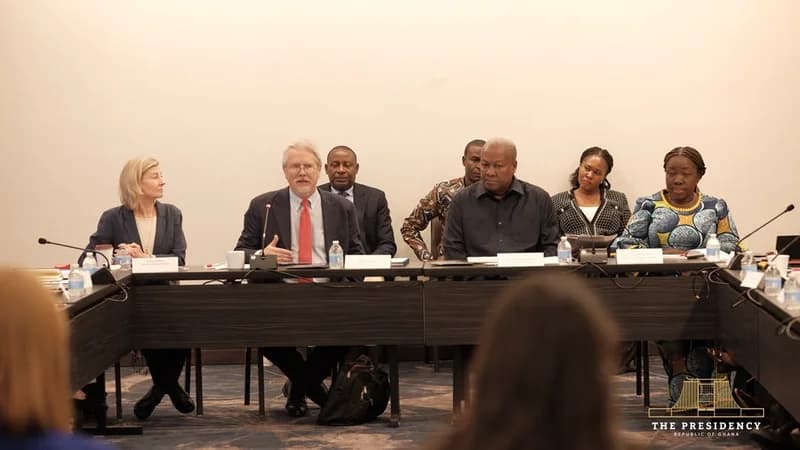
President John Mahama has called for a fundamental shift in global development, advocating for the Global South to take full control of its health and development priorities. Speaking at the 81st United Nations General Assembly in New York, the President introduced the "Accra Reset" initiative, a framework designed to dismantle donor dependence and geostrategic marginalization. This bold diplomatic push has drawn significant international acclaim, with leaders such as Brazilian President Luiz In!cio Lula da Silva and former UK Prime Minister Gordon Brown praising Ghana’s leadership in both development reform and the pursuit of global reparatory justice.
At the heart of the President’s agenda is the "A Sovereign Future for Health" report, which outlines ten recommendations for reforming global health architecture. Mahama argued that "there can be no ownership without control," stressing that African nations and their peers in the Global South must move beyond being passive recipients of aid toward becoming self-reliant architects of their own health systems. He emphasized the need for increased domestic pharmaceutical production and stronger local capacities to ensure global health security. Former UK Prime Minister Gordon Brown endorsed the initiative, noting that the Accra Reset provides a vital alternative to external reliance in an era of multiple global crises.
Parallel to his development agenda, President Mahama was lauded for his leadership in advancing the cause of reparatory justice. President Lula of Brazil specifically highlighted a Ghana-led resolution, adopted by the UN on March 25, 2026, which formally recognized the trafficking of enslaved Africans as the "gravest crime against humanity." This historic declaration has set the stage for further dialogue on reparations, with Ghana already hosting high-level conferences in Accra to transform recognition into actionable justice. President Lula urged the international community to follow Ghana’s lead in addressing historical injustices through multilateral cooperation and democracy.
On the economic front, President Mahama is leveraging the Millennium Development Authority (MiDA) as a strategic coordinator for philanthropic engagement, ensuring international partnerships align with national priorities. During a meeting with Alex Soros of the Open Society Foundations, the President underscored the importance of domestic financing and institutional capacity to withstand global debt pressures. In a further demonstration of Ghana's expanding diplomatic footprint, Foreign Affairs Minister Samuel Okudzeto Ablakwa signed a Memorandum of Understanding with Panama to deepen bilateral ties in trade, cocoa production, and maritime affairs, signaling a commitment to "pragmatic interdependence."
As Ghana prepares to assume the chairmanship of the African Union in 2027, the President intends to integrate the Reset agenda into the continent's broader policy frameworks. By prioritizing maternal and child health and advocating for stronger governmental accountability, Mahama aims to foster a development model centered on human dignity. These efforts at the UNGA reflect a strategic vision to reposition Ghana and the Global South as equal partners in the global arena, ensuring that development is driven by local expertise and sustainable, long-term investment.
Related topic
John Mahama: Latest News & Updates →

