••
President Mahama’s 'Reset Agenda' Drives Massive Expansion in School Feeding and Tertiary Student Loan Funding
•3 min read•8 sources
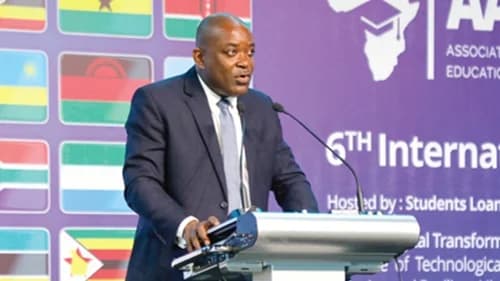
The Government of Ghana is significantly scaling up financial support and social safety nets for students as part of President John Mahama’s 'Reset Agenda' for education. Highlighting this progress, Professor Ahmed Jinapor, Director General of the Ghana Tertiary Education Commission (GTEC), recently lauded the 'No Fees Stress' policy, which ensures that no qualified Ghanaian is denied education due to financial hardship. This comprehensive framework includes removing academic fees for first-year students, providing free tertiary education for persons with disabilities, and enhancing the Student Loan Plus facility. To date, over 384,600 students have benefited from these reforms, which are anchored by a digitalized financing system designed for efficiency and transparency.
Supporting this vision, the Students Loan Trust Fund (SLTF) has disbursed approximately GH¢600 million this year across various portfolios. Dr. Saajida Shiraz, the CEO of SLTF, announced plans to increase this funding to GH¢800 million for the upcoming academic year, with a target of reaching 200,000 beneficiaries. These investments are viewed as critical components of human capital development, moving the country toward a more equitable educational landscape. The shift toward a fully digitalized loan application and disbursement process has been identified as a key factor in improving accessibility for students nationwide.
In tandem with tertiary reforms, the Ghana School Feeding Programme has seen a major expansion under the leadership of the Minister for Gender, Children, and Social Protection, Dr. Agnes Naa Momo Lartey. The program now provides daily nutritious meals to 4.53 million children, a significant increase from 4.03 million in 2024. Budgetary allocations reflect this growth, with funding set to rise from GH¢1.78 billion in 2025 to GH¢1.98 billion in 2026. The grant per meal was also increased to GH¢2.00 to maintain nutritional standards. Minister Lartey noted that all caterer arrears from 2024 have been settled, and enhanced compliance monitoring is in place to ensure the program's long-term effectiveness.
Complementing government efforts, community and corporate initiatives are also stepping in to bridge the gap for vulnerable learners. The RNAQ Foundation, in partnership with the Ga Mantse Foundation, recently launched the Ga-Dangme Youth Scholarship Fund to support academically talented but financially challenged tertiary students within the Ga-Dangme community. Additionally, ASA Savings and Loans contributed GH¢25,000 to support 25 needy students in the Ayawaso Central Municipality, covering essential costs such as school fees and textbooks. Together, these public and private efforts underscore a national commitment to ensuring that education remains a fundamental right rather than a privilege tied to economic status.
Related topic
John Mahama: Latest News & Updates →

