••
President Mahama Orders Emergency Waste Evacuation in Accra as Environment Minister Demands Accountability
•2 min read•8 sources
President John Mahama has declared the massive waste accumulation at Agbogbloshie, Sodom and Gomorrah, and James Town Beach a national emergency, directing an immediate and comprehensive cleanup operation. The initiative, led by the Minister for Local Government, Chieftaincy and Religious Affairs, Mahama Ayariga, seeks to clear refuse heaps that have accumulated for over 30 years, some reportedly reaching the height of a 10-storey building. This directive is part of a broader government push to reclaim these areas for developmental projects while ensuring public health and safety in the capital.
To execute this massive undertaking, the Ministry of Local Government is collaborating with the Ministries of Finance, Defence, and Roads and Highways. The operation will utilize advanced technology, including drones and artificial intelligence, to assess waste volumes and plan logistics. The Ghana Armed Forces and private contractors, including the Jospong Group, will be deployed to transport the waste to the Adipa Waste Management Centre. Minister Ayariga emphasized that while the 24-hour operation may cause temporary inconvenience to motorists, the long-term benefits of clearing the sites and securing them with military support against future dumping are paramount.
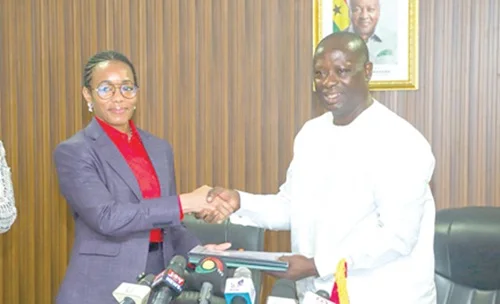
Parallel to these sanitation efforts, the newly appointed Minister of Environment, Science and Technology (MESTI), Dr. Zanetor Agyeman-Rawlings, has called for strict transparency and accountability within her ministry. During her handing-over ceremony, she emphasized that prudent resource management is essential for implementing environmental protection policies. Her predecessor, Emmanuel Armah-Kofi Buah, expressed confidence in her leadership, citing her track record as an environmental advocate. Dr. Agyeman-Rawlings reminded staff and citizens alike that protecting the environment is a shared constitutional responsibility, signaling a period of rigorous oversight at MESTI.
While the administration focuses on environmental and administrative reforms, it also faces complex challenges in labor relations and economic policy. The Ghana Civil Aviation Authority (GCAA) is currently navigating a dispute with the Ghana Air Traffic Safety Electronics Association (GhATSEA), dismissing allegations of victimization and insisting that security measures taken were necessary for aviation safety. Simultaneously, policy experts are urging the government to adopt a nuanced approach to mineral economics. As Ghana explores domestic lithium processing, analysts suggest that a regional African strategy for mineral beneficiation might be more viable than isolated export bans, given the high costs and technical expertise required for industrialization.

