••
National Concerns Rise as New Ogbojo Residents Petition President Mahama Over Forced Evictions and Economic Hardship
•3 min read•5 sources
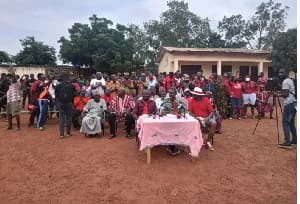
In a week marked by escalating social and economic anxieties across Ghana, residents of New Ogbojo near Madina have issued an urgent appeal to President John Mahama to intervene following a series of aggressive eviction attempts. Between September 19 and 21, 2026, armed land guards reportedly targeted over 1,900 households, sparking widespread fear and instability in the community. This surge in land-related conflict coincides with a devastating report from Macheleyili in the Northern Region, where a local man, Alhaji Abdulai, tragically took his own life after failing to secure funds for his son’s Senior High School (SHS) admission prospectus—a stark reminder of the financial pressures weighing on Ghanaian families under the current economic climate.
The theme of property insecurity and economic vulnerability was further echoed by Ghanaian entrepreneur and musician Itz Tiffany, whose business at Laboma Beach in Accra was recently demolished. Reflecting on the unpredictability of life and the harsh realities of urban development, she cautioned critics that "none of us is untouchable," urging for greater compassion toward those facing sudden losses. These incidents of demolition and eviction have intensified the national dialogue regarding property rights and the protection of livelihoods in rapidly developing urban zones, placing additional pressure on the government to ensure fair treatment for all citizens.
Aminst these localized crises, the Hausa community gathered in Buipe for their annual cultural festival, where National President Alhaji Ahmed Tijani Abubakari Ali (Tafida) called for national unity and increased vigilance. Addressing the broader security landscape, Tafida emphasized the importance of monitoring newcomers and advocated for the citizenship rights of long-time Hausa residents, specifically regarding access to passports. He framed the Hausa community not just as a cultural group, but as foundational contributors to Ghana’s market infrastructure and trade networks, calling for a narrative shift that recognizes their historic economic significance and their role in the country's development.
Beyond land and heritage, the challenges of systemic corruption and youth welfare continue to dominate the public discourse. In Accra, Okada riders have raised alarms over alleged extortion by officers from the Motor Traffic and Transport Directorate (MTTD), claiming they are frequently forced to pay between GH₵100 and GH₵200 during traffic enforcements without clear justification. These allegations align with recent data suggesting that over 54% of bribery interactions involve the MTTD. Concurrently, community leaders at the Buipe festival urged for collective action against drug abuse among Zongo youth, stressing the need for education and skills training to empower the next generation. These multifaceted issues present a complex landscape for the Mahama administration as it seeks to balance economic stability with social justice and institutional accountability.
Related topic
John Mahama: Latest News & Updates →
