••
President Mahama Directs Local Assemblies to Enhance Transparency and Accountability through Local Language Broadcasts
•2 min read•6 sources
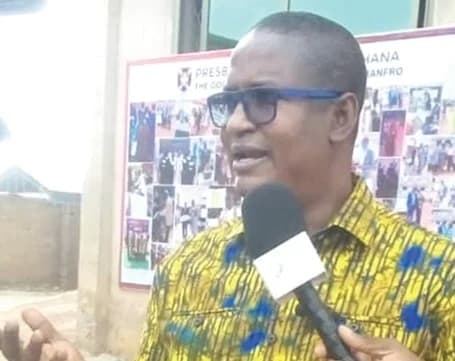
President John Mahama has issued a sweeping directive to all Metropolitan, Municipal, and District Assemblies (MMDAs) to conduct "accountability series" aimed at reporting their performance directly to the public. Announcing the directive, the Minister of Local Government, Chieftaincy, and Religious Affairs, Mahama Ayariga, stated that these initiatives are intended to deepen transparency and ensure citizens are well-informed about government projects. To bridge the communication gap, MMDAs are now mandated to hold statutory meetings under the Local Governance Act and broadcast them on local FM stations in indigenous languages, fostering more inclusive citizen participation in local governance.
Parallel to these transparency efforts, Minister Ayariga is calling for a significant paradigm shift in how local assemblies are funded. Speaking at a meeting with development partners in Accra, the Minister emphasized the need for MMDAs to reduce their historical over-reliance on international donors for financial aid. He urged local authorities to instead develop innovative local funding mechanisms and focus on capacity building and knowledge-sharing to ensure sustainable development. This shift aligns with the administration's goal of fostering self-reliant local governance structures that are accountable primarily to their own constituents.
Sanitation and waste management have also emerged as high-priority areas for the Ministry. During the National Sanitation Day (NSD) activities in October 2026, Minister Ayariga issued a 30-day deadline for MMDCEs to identify and secure land for waste transfer stations to modernize the country’s waste disposal system. The government plans to distribute two bins per household to facilitate the separation of organic and solid waste, while also replacing aging waste transportation vehicles. In Adaklu, District Chief Executive Jerry Yao Ameko reinforced this national agenda, describing sanitation as a fundamental civic responsibility vital for public health and the prevention of diseases such as malaria.
The impact of these local governance reforms is already being felt across various constituencies. In the Adentan Municipality, Member of Parliament Mohammed Adamu Ramadan highlighted that 80% of the District Assemblies Common Fund (DACF) will be allocated directly to local assemblies to accelerate infrastructure development, particularly in roads. Similarly, the Ada West District Assembly recently completed and handed over eight projects valued at GH₵4.3 million, including school blocks and CHPS compounds. These developments, funded through the DACF, underscore the government's commitment to improving educational and health services through empowered and transparent local authorities.
Related topic
John Mahama: Latest News & Updates →

