••
John Mahama maintains 65% approval rating in midterm poll
•2 min read•1 source
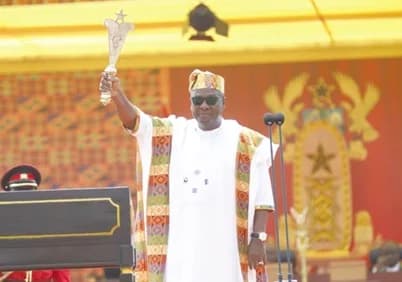
President John Mahama has secured a 65% approval rating at the midterm point of his administration, according to a September 2026 poll released by Global InfoAnalytics. The survey, conducted as the President nears the halfway mark of his second, non-consecutive term, indicates that he retains significant public goodwill despite a slight dip from the 71% approval rating recorded in June 2026. The findings highlight a resilient personal appeal for the President as his government navigates the complexities of governance following his January 2025 inauguration.
The poll results suggest that the President’s popularity is largely driven by his administration’s focus on high-visibility infrastructure projects and the successful stabilization of fuel prices across the country. These tangible developments have provided a sense of progress to the electorate, reinforcing Mahama’s image as a leader capable of delivering physical results. Analysts note that these factors have acted as a buffer, maintaining his standing even during periods of economic adjustment.
However, the data also reveals a stark contrast between the President’s personal approval and the perceived effectiveness of his administration. While 65% of respondents approve of Mahama himself, a mere 15% rated the overall performance of his government as "Good" or "Very Good." This significant "performance gap" suggests that while voters remain fond of the President, they hold more critical views of the broader executive machinery and the pace of institutional reform.
This discrepancy poses a unique challenge for the ruling National Democratic Congress (NDC), particularly as President Mahama has previously pledged to serve only a single four-year term during this second stint in office. To ensure a lasting legacy and facilitate a smooth transition for his party, observers argue that the administration must work to close the gap between the President’s popularity and his government’s perceived efficiency. The coming years will likely focus on whether this personal support can be transformed into broader institutional confidence before the next general election.
Related topic
NDC (National Democratic Congress): Latest News →
