••
Government Unlocks $3.5bn Petroleum Investment and Accelerates Major Infrastructure Projects Under President Mahama
•3 min read•12 sources
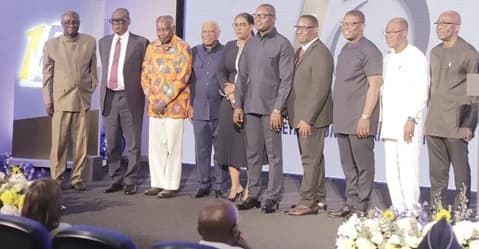
Ghana’s upstream petroleum sector is set for a massive revitalization following the resolution of long-standing disputes between the government and key oil partners, unlocking approximately $3.5 billion in fresh investment. Dr. John Abdulai Jinapor, the Minister of Energy and Green Transition, emphasized that these resolutions have significantly boosted investor confidence, allowing for a $2 billion commitment to the Jubilee and TEN fields to sustain production and a $1.5 billion investment in the Offshore Cape Three Points project. Emeafa Hardcastle, CEO of the Petroleum Commission, noted that these financial commitments are crucial for lowering gas prices and securing Ghana’s position as a top investment hub amid global market volatility.
In tandem with energy sector gains, President John Mahama has intensified oversight of national infrastructure projects, specifically the Saglemi Housing Project and major road networks. During a recent inspection, LMI Group CEO Kojo Aduhene announced that Saglemi will be transformed into a modern residential community featuring dedicated water treatment, high-speed fibre-optic internet, and a proposed railway link to the Dawa Industrial Zone. The project aims to deliver 700 housing units by March 2027, with a total of 1,500 units expected by the end of that year. Additionally, the reconstruction of the Accra-Tema Motorway into a 10-lane dual carriageway is now 50% complete, while asphalt works have commenced on the 34-kilometre Sunyani Outer Ring Road under the government’s "Big Push" initiative.
Despite these advancements, the administration is addressing significant operational challenges within the utility and digital sectors. Energy Minister Jinapor has directed the Public Utilities Regulatory Commission (PURC) to increase scrutiny of the Electricity Company of Ghana’s (ECG) commercial performance to ensure financial stability. This comes as the National Information Technology Agency (NITA) warns that persistent power outages and over 8,000 instances of fibre-optic vandalism are driving up the cost of internet and digital services, forcing operators to make costly investments in backup power systems. The Energy Commission is also urging the hospitality industry to adopt energy-efficient strategies to mitigate high operational costs.
Moving forward, the government is focused on maintaining a stable fiscal regime and transparent regulations to sustain this momentum. While infrastructure and energy investments promise long-term economic growth, immediate concerns regarding the resilience of the national grid and the impact of illegal mining on water quality remain high on the public agenda. Stakeholders and industry experts continue to call for integrated solutions that protect both the environment and the country's economic security, ensuring that the benefits of large-scale industrial investments reach the average Ghanaian citizen through reliable services and affordable housing.
Related topic
John Mahama: Latest News & Updates →