••
Ghana's Galamsey Crisis Deepens as Enforcement Bribery Scandal and Expert Critiques Challenge President Mahama’s Administration
•3 min read•8 sources
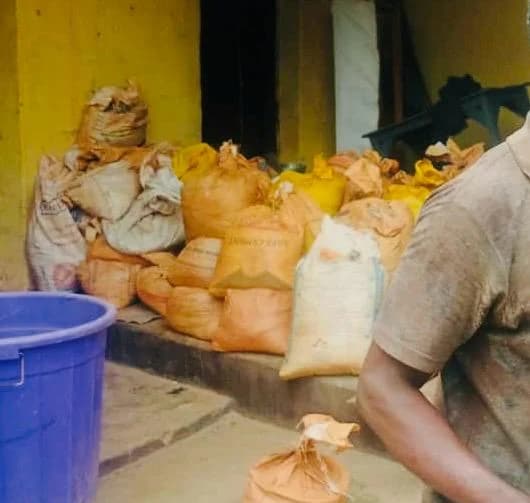
The fight against illegal small-scale mining, popularly known as galamsey, has reached a critical juncture in Ghana as new reports of institutional corruption and systemic failure emerge. In the Ashanti Region, nine members of the Blue Water Guards were arrested on August 21, 2026, in Manso Adubia for allegedly impersonating officials from the National Anti-Illegal Mining Operations Secretariat (NAIMOS). The suspects are accused of taking bribes and extorting money, a development that NAIMOS officials warn could severely tarnish the reputation of the national anti-galamsey program. This breach of professionalism occurs amidst broader concerns that the current administration, led by President John Mahama, has yet to implement a sufficiently rigorous strategy to curb the ongoing environmental destruction.
The struggle is further complicated by a growing trend of vigilantism and frustration among traditional leaders. In the Ahafo Region, Nana Okofo Dartey Amoako Atta, the Ankobeahene of the Tanoso Traditional Council, was recently arrested and granted bail for operating an unauthorized task force. While the chief claimed his group was seizing equipment to protect local resources, police charged him with promoting vigilantism and impersonating public officers after he failed to hand over seized items to law enforcement. Simultaneously, other chiefs in Tano North have publicly criticized the police for the "routine release" of arrested miners, arguing that institutional failures at the local level are allowing the Tano River to be polluted with impunity, despite community efforts to assist in arrests.
Adding weight to these concerns, economic policy analyst Senyo Hosi of the OneGhana Movement has described galamsey as an "endemic" issue that has become a primary livelihood for nearly 100,000 Ghanaians. Speaking on JoyNews, Hosi presented alarming data showing that the number of people involved in illegal mining surged from 14,500 in August 2024 to approximately 98,000 by August 2025. Hosi further alleged that the proceeds from these illegal operations are now deeply embedded in the nation’s social fabric, claiming that galamsey funds political parties, churches, and media houses. He argued that success in the fight against illegal mining should be measured by water quality and environmental health rather than the volume of enforcement actions.
Criticism has also come from IMANI Africa’s Vice President, Kofi Bentil, who characterized the current government’s response as insufficient. Bentil noted that while the previous Akufo-Addo administration’s efforts were ultimately unsuccessful, they were at least visible, whereas the current NDC-led government under President Mahama appears to lack a serious, comprehensive approach. He called for a shift in focus from enforcement alone toward large-scale environmental restoration and a fundamental review of mining policies. As the crisis escalates, the Mahama administration faces increasing pressure to move beyond the current NAIMOS framework and address the economic drivers that make galamsey more lucrative for the youth than formal employment.
Related topic
NDC (National Democratic Congress): Latest News →

